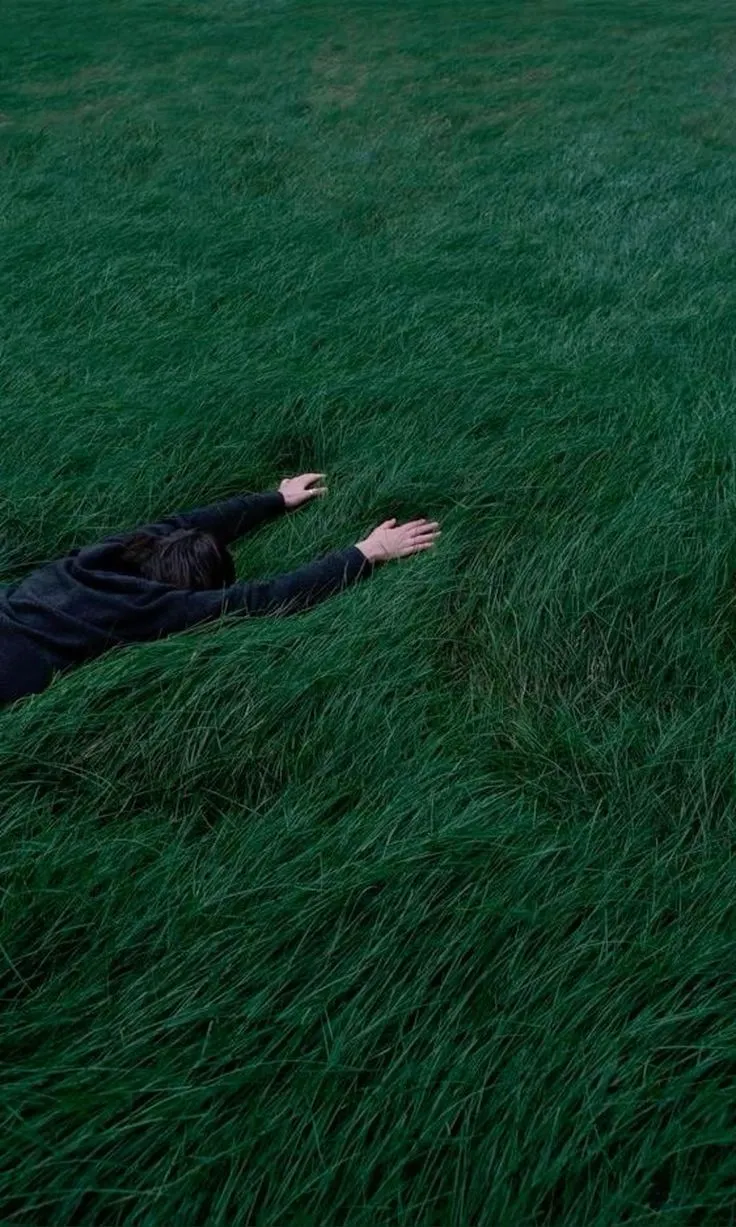
Theatrically — that’s where you get catharsis. The Greeks went to see drama because they felt like it wasn’t happening to them. — Arca
It all started by some happenstance, where things align beautifully, I found myself in the right place, holding just the perfect book, and a smooth cup of coffee. I didn’t choose this on my own, but it is near perfection.
The book was The Death of Ivan Ilyich. I had close to no thrill picking up the book, as I do most books; it was just the familiar bookworm’s appetite, I must take my dose of pages for sure.
To my greatest awe, this book was nothing near the bland bore I had imagined. I may have judged the book by its cover, silly blunder! My evenings were spent with this book, and it stayed with me even after I had flipped through to the last page.
Leo Tolstoy’s work was not simply a story about death, but also about the terrifying possibility of reaching the end of your life and realizing you had never been fully honest with yourself while you were living. By the final page, I found myself returning to a word I had understood intellectually but had never truly experienced until then — Catharsis.
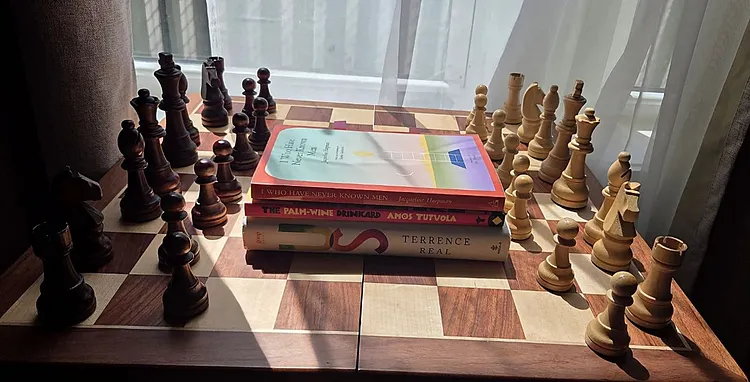
Dearest reader,
Like me, you may have heard the word catharsis, but have you experienced it?
Catharsis is often described as an emotional release brought on by art, music, or literature. But that definition has always felt incomplete to me.
Some works do more than release emotion; they excavate it, forcing you to sit alone with thoughts you normally outrun, and feelings you did not know were still alive within you. That’s the cathartic feeling I experienced after reading The Death of Ivan Ilyich, a subtle kind of recurring healing that has lasting effects on the soul.
It felt like standing alone in a snowstorm long enough to stop noticing the cold, until suddenly the frostbite appears and you realize something has been wounding you the entire time. And somehow, as a reader, I could see the marks. Now I sound like I’m on some kind of cathartic high.
Oh well, here are the books I read in April with my personalized nuggets.
The Death Of Ivan Ilyich and Other Stories by Leo Tolstoy
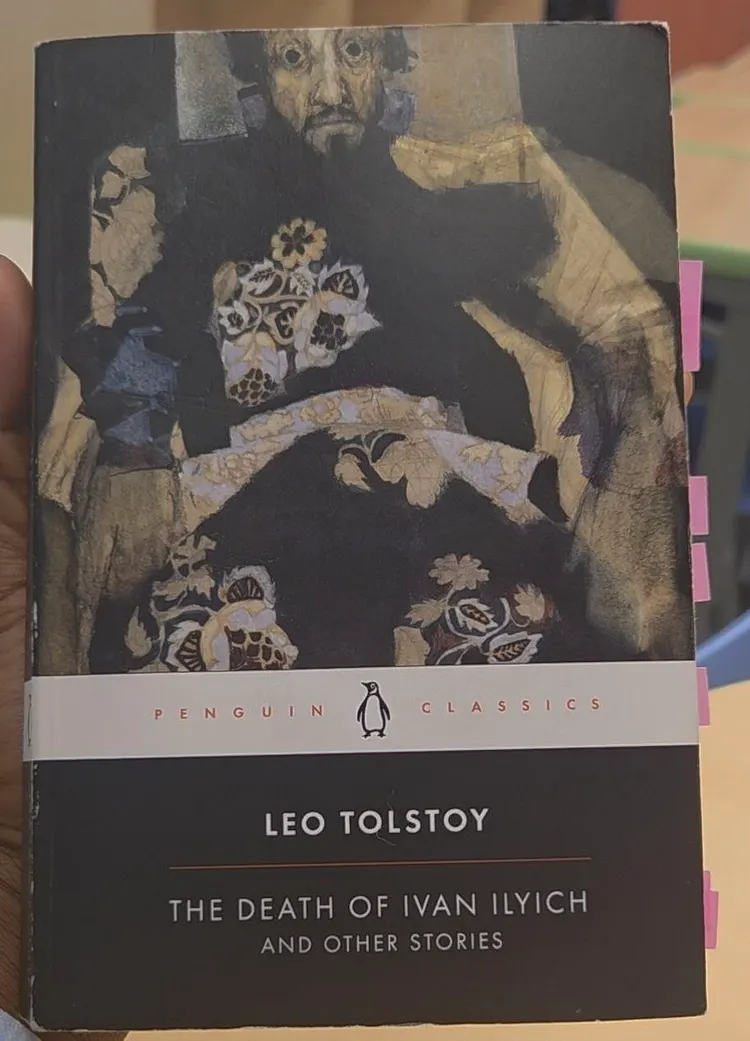
“Death is not the greatest loss in life. The greatest loss in life is what dies inside us while we live” — Norman Cousins.
Tolstoy believes most men die without ever truly living. Permit me to scare you a bit. Statistically, the average human lifespan is absurdly, insultingly brief. If you are lucky to live to be 80, you’ll have had about 4,000 weeks, but in how many of those weeks have you truly lived?
Dear reader, I implore you to confront not only the certainty of death, but the deeper question hidden beneath it: What does it mean to have lived well before death arrives? Tough question, eh? These were the kind of existential questions I asked myself after reading this book.
What makes The Death of Ivan Ilyich so unsettling is that it never allows death to remain a distant abstraction. Just like in chess, every move creates a weakness; the same is true in life, we die every day from the day of birth. In Leo Tolstoy’s hands, mortality becomes intimate, immediate, almost unbearably personal. At its core, the book is existential philosophical fiction, though it rarely feels philosophical in the academic sense. Tolstoy does Tolstoy things; he does not lecture, he reveals the already existing truth we have overlooked, and we are left with a sad eureka moment.
What was revealed to me about the novella is its deeply didactic nature. Not didactic in the sense of rigid moral instruction, but as a quiet appeal for self-examination. Beneath every page lies the same difficult truth: love may be the only measure of life that survives death’s judgment.
The themes woven through the book feel timeless: the meaning of life, death and mortality, authentic versus superficial living, suffering, and spiritual awakening. Somehow, none of these ideas feel distant or theoretical to me or you. They emerge through ordinary conversations, private fears, domestic disappointments, and moments of painful clarity. Perhaps the most frightening realization Tolstoy offers is this: it is entirely possible to realize too late that you have lived the wrong kind of life. How does one live a good life, then? I ponder …
Ivan’s tragedy is not simply physical death, but a spiritual recognition. Only as his life collapses does he begin to understand how much of it had been shaped by performance rather than truth.
These days, I’m not easily impressed by people; borrowed status always comes at a higher cost than it appears. Alas, authenticity matters more than wealth, status, or public admiration. Society rewards appearances, but death pays them no mind.
“Their going hence, even as their coming hither; ripeness is all.” This line lingers in my mind with particular weight. There is something deeply human in that imagery; we arrive, we depart, and somewhere in between we are asked to ripen, to become fully awake to our own existence before it disappears.
“The choice that springs from a sense of duty is courage, while a choice made under the influence of base feelings is cowardice.”
Throughout the collection, Tolstoy meditates on courage, morality, and human intention with extraordinary precision. The distinctions between courage and cowardice have been obscured or even ignored by modern life. Vanity can imitate bravery just as fear can disguise wisdom. A man who risks his life for pride or greed is not necessarily courageous, just as a man who avoids danger out of responsibility or conviction cannot automatically be called a coward. Tolstoy refuses simplistic moral categories because human motives themselves are rarely simple.
Equally striking is his distrust of performative strength. “When a man feels he has the strength to perform a great deed, there is no need for words.” Real strength, in Tolstoy’s world, exists quietly, without spectacle, without the hunger to be witnessed. Visibility is not the same as depth. I would choose depth any day.
Another melancholic stance from this book was on marriage. Tolstoy sees marriage as more complicated than death; with marriage, there is always the who, where, and when. Marriage is a social duty that carries a subtle melancholy. Married life may offer comfort and structure, yet it remains “a complex and difficult business.” Respectability itself becomes exhausting; a role carefully maintained both at home and at work. The tragedy is not that society asks people to perform, but that many eventually forget where the performance ends and the self begins.
If I could go back in time, I sure would ask Tolstoy about morality and the environment. “What you’re all saying, you see, is that on his own, a person can’t distinguish the good from the bad…” This line hit hard. Are we shaped entirely by circumstance, or do we remain responsible for who we become despite it? Tolstoy leaves the question unresolved, perhaps because life itself never resolves it cleanly.
Reading The Death of Ivan Ilyich feels less like consuming literature and more like standing beneath an unforgiving light. The novella asks whether the life we are building is truly our own, or merely a version of ourselves constructed for the approval of others. And once that question enters the mind, it becomes very difficult to silence. I am writing my life story with purpose, for it is my legacy. If you remember Anna Karenina, only one chapter has a name, “ Death”. make this chapter worthwhile.
If The Death of Ivan Ilyich confronts the terror of living falsely, then I, Who Have Never Known Men, asks an entirely different, but equally unsettling question: What remains of a person when the world that shaped them disappears?
I Who Have Never Known Men by Jacqueline Harpman
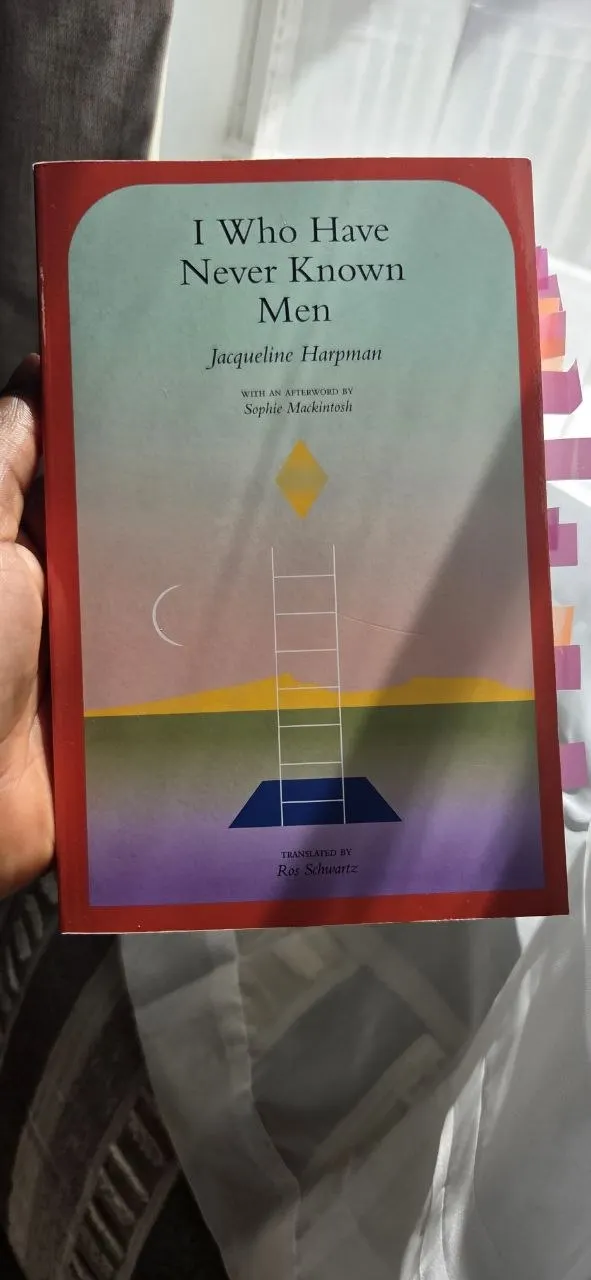
“The world is a very puzzling place. If you’re not willing to be puzzled, you just become a replica of someone else’s mind”. Noam Chomsky
If you like puzzling, exhilarating, and disorienting reads, this is the book for you. I think about this book every day. It’s a masterpiece, but the most disorienting book for a man reading it. It offered access to a perspective I realized I rarely encounter in literature. This book was all shades of chaos and catharsis.
Men were largely absent from the story, yet their presence lingers everywhere, not through intimacy or dialogue, but through systems of control, confinement, and fear. Masculinity exists less as identity and more as consequence. The novel never shouts this idea. It simply allows its silence to expose it.
The book strips away nearly everything society uses to construct identity: relationships, culture, gender roles, institutions, and history. What remains is a question so bare it becomes difficult to answer: What is a human being without all of that?
The novel moves through themes of existentialism, isolation, loneliness, identity, and social conditioning, but it approaches them with remarkable restraint. Jacqueline Harpman never forces revelation upon her readers; she keeps us guessing, she creates absence after absence until the reader begins to feel how dependent human beings are on structure, language, memory, and other people to understand themselves.
What unsettled me most was the absence of what we typically call a “normal life.” There is no career, no ambition, no social hierarchy, no traditional success to pursue. The narrator grows up without any of the familiar markers we often associate with adulthood, especially masculinity. No competition. No inherited expectations. No performance of status. It quietly raises an uncomfortable possibility: how much of identity is genuinely ours, and how much has simply been assembled for us by society?
Reading the novel felt like watching humanity reduced to its emotional skeleton — everything laid bare. Even companionship becomes fragile and unfamiliar. There is no romance in the conventional sense, no love story to stabilize the narrative. Instead, the book explores connection in its most primitive form: the human need not to disappear entirely in the presence of another person. The characters relate to each other without the social scripts most of us inherit from childhood. They care for one another without fully understanding what care is supposed to look like. This sense of unfamiliarity is what gives the novel its peculiar tenderness.
“It is impossible to predict what might happen in a world where you don’t know the rules.”
This line had me thinking perpetually. The sentence feels larger than the novel itself. It touches the helms of survival and existence; it made me humble and forced me into a flight mode where calmness was my only way out. Human beings depend on invisible systems, customs, meanings, and routines more than we realize. Once those vanish, certainty vanishes with them.
Another cold line was “You don’t build endurance by pushing yourself beyond your limits.” In a world obsessed with productivity and self-optimization, the statement feels almost radical. Survival, the novel suggests, is not always heroic. Sometimes endurance is simply the quiet decision to continue.
And then there is the heartbreaking reflection: “Perhaps you never have time when you are alone, you only acquire it by being with others.” Few novels have described loneliness with such precision. Solitude only becomes meaningful once a connection has existed. Without relationships, even the concept of loneliness begins to dissolve.
What ultimately makes I, Who Have Never Known Men so haunting is that it refuses easy conclusions about human nature. The novel keeps returning to one silent question: How much of our humanity is intrinsic? If society disappears, its rules, its identities, and its language for love and power. What remains?
And perhaps even more frightening: Would we still recognize ourselves afterward?
Yet despite its bleakness, the novel never fully abandons hope. One of its quietest truths is also its most compassionate: “No life is ordinary. No life is without hope, without light, even during the unimaginable.” In a world emptied of meaning, the smallest gestures of care begin to feel sacred.
By the end, the novel left me with the strange feeling that humanity is both far more fragile and far more resilient than we like to believe.
After the suffocating stillness of I Who Have Never Known Men, reading The Palm-Wine Drinkard felt like stepping into a fever dream told beside a fire at midnight; strange, alive, chaotic, and deeply human.
The Palm-wine Drinkard by Amos Tutuola
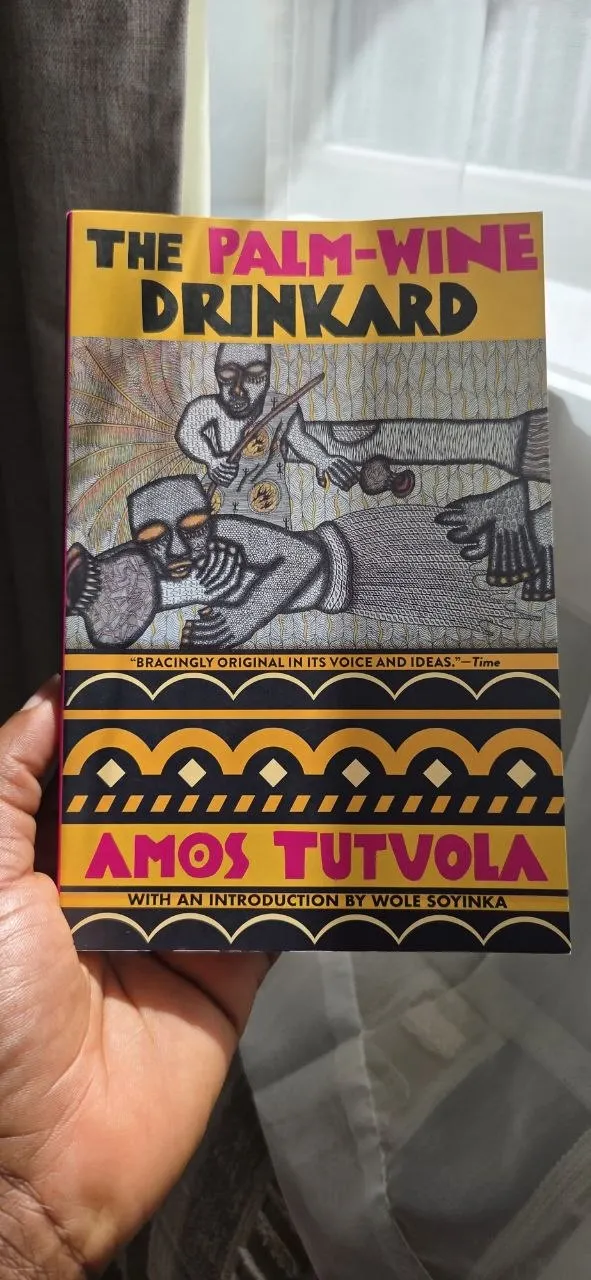
“All addictions are low-level search for God.“ Carl Jung
You can always bank on Carl Jung to unsettle you with rather simple but undiscovered truths. In my opinion, addictions never truly satisfy. A starving soul will attach itself to something.
The Palm-Wine Drinkard himself is difficult to admire in the traditional sense. He was doing too much, impulsive, often consumed by appetite. Yet that is precisely what makes him compelling. He feels deeply human in the way all flawed people are: endlessly searching for satisfaction while never fully understanding what they are truly hungry for.
The novel’s relationship with desire fascinated me most. Palm wine becomes more than a drink; it transforms into dependency, ritual, and escape. Addiction in the novel is not framed with modern psychological language, yet its emotional truth is unmistakable. Desire keeps pulling the narrator forward even when it places him in danger. The journey itself begins because he cannot imagine life without the source of his pleasure. And perhaps that is what makes the novel timeless. Human beings rarely pursue only what nourishes them. Often, we pursue what consumes us.
At its core, the book is a fantasy adventure rooted in African folklore, but beneath its surreal encounters and wandering spirits lies something far more profound. The novel constantly circles life, death, the afterlife, addiction, and desire. The novel moves like folklore itself: unpredictable, exaggerated, sometimes frightening, sometimes absurd. It does not follow the rigid logic of Western fantasy, instead, it drifts between the living and the dead, the spiritual and the ordinary, as though no firm boundary exists between them.
What gives The Palm-Wine Drinkard its haunting quality is the way it treats death. The dead are never entirely gone. Spirits move alongside the living. Fear and wonder coexist naturally. The afterlife is not distant or abstract; it feels woven into everyday existence. In Tutuola’s world, reality itself remains porous.
Some of the book’s simplest sayings carry the weight of old wisdom passed through generations. “Do not follow an unknown man’s beauty.” The line feels deceptively simple, yet it speaks to temptation itself; the danger of being seduced by appearances without understanding what lies beneath them. Beauty, charm, desire: all can become traps when pursued blindly. Trust but verify!
Another line stayed with me long after reading: “This is only fear for the heart but not dangerous to the heart.” Its phrasing feels almost dreamlike, yet emotionally it rings true. Not every fear destroys us. Some fears protect us. Some simply remind us that we are alive.
If the previous books questioned mortality, identity, and desire, then Getting Past You & Me turns its attention toward something equally difficult: intimacy.
Getting Past You and Me by Terrence Real
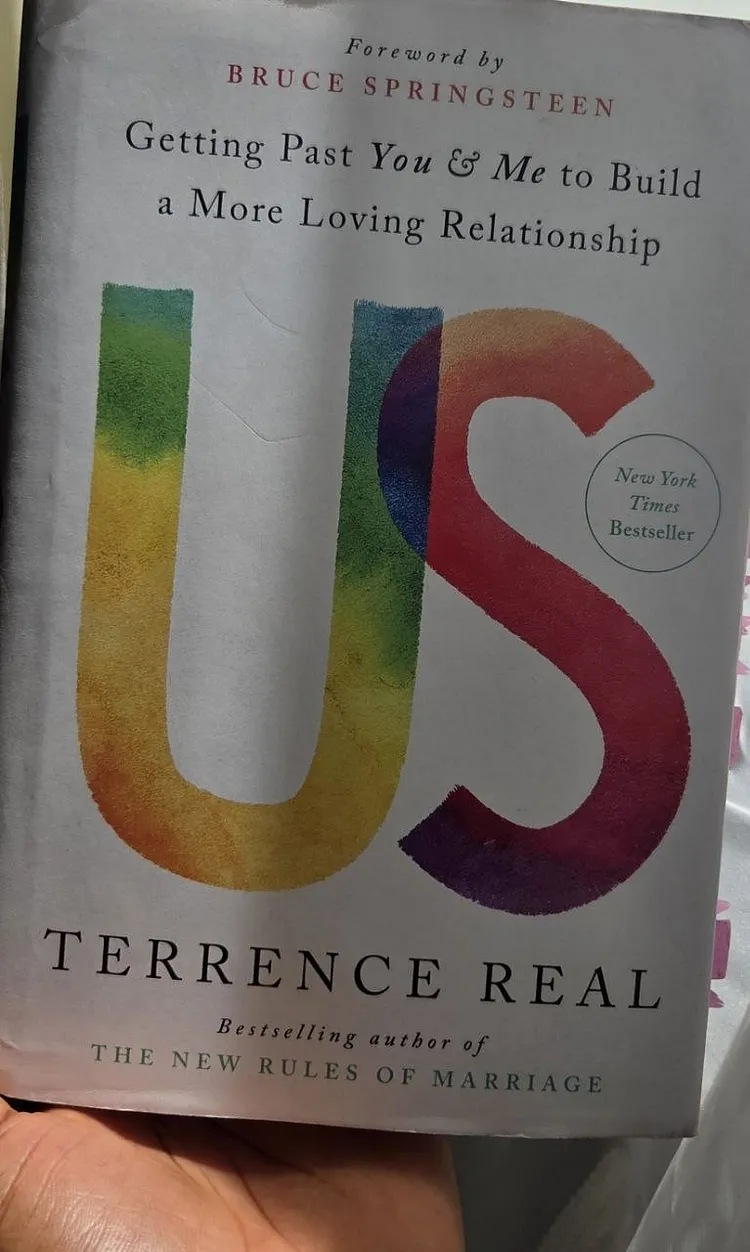
“Ideal lovers thrive on people’s broken dreams, which becomes lifelong fantasies. “ — Unknown
Dear you, who romanticize relationships. Terrence Real is your unpaid trauma therapist.
Terrence writes with remarkable clarity about conflict. “There are two types of couples in the world: those who fight and those who distance. I’d add a third type: those who do both.” One partner explodes while the other retreats. “Hailstorm and tortoise.” It is such a simple image, yet painfully recognizable. So many relationships are not destroyed by hatred, but by incompatible survival strategies.
What struck me most was how unsentimental the book is. He dismantles the fantasy that love alone sustains them. Instead, he argues that most relationships become battlegrounds between you, me, and the fragile possibility of us.
There is something about connection; why people long for it so desperately, why they sabotage it so consistently, and why genuine intimacy often requires confronting parts of ourselves we would rather avoid. This is a distinction that runs through the entire book.
Modern life trains people toward individualism so aggressively that many no longer know how to exist relationally. One passage stayed with me long after reading: “The price we pay as a society for our toxic individualism and patriarchy is our permanent estrangement from one another.” The sentence widens the conversation beyond romance. Disconnection is not merely personal; it is cultural. Whether through racism, class division, gender expectations, or emotional isolation, the outcome remains the same: people lose the ability to recognize one another fully.
And once we lose that, love itself becomes distorted. One person pursues. The other disappears.
What gives the book emotional depth is its insistence that relationships begin long before another person enters our lives. “You have to first connect; first to yourself, to your feelings, needs, and desires, because great relationships start with your relationship to yourself.” That idea feels obvious when written plainly, yet most people spend years disconnected from their own emotional reality while expecting intimacy from others.
The book repeatedly returns to trauma not as memory, but as repetition.
“You don’t remember trauma; you relive it.”
This line explains so much about human relationships. Old wounds rarely stay in the past, they reappear in arguments, silences, fears of abandonment, and emotional withdrawal. People often believe they are reacting to the present moment when, in reality, they are reliving unresolved pain from years earlier.
And then comes one of the book’s most heartbreaking truths: “Each generation acts out of its wounds.” Families pass pain downward almost unconsciously. Parents recreate versions of the emotional environments that shaped them, even when they desperately wish not to. Terrence’s argument is not fatalistic, though. He believes cycles can be interrupted, but only through awareness, through learning to move beyond reactive, ego-driven consciousness into something more relational and compassionate.
Some of the book’s sharpest insights concern family dynamics and emotional boundaries. “What are the nine most hurtful words in the English language? Honey, you understand me more than your father does.” The line lands with devastating precision. A child should never become the emotional substitute for an adult relationship. When parents burden children with unresolved loneliness or resentment, they distort the child’s understanding of love, responsibility, and self-worth.
Repeatedly, the author distinguishes between functional and dysfunctional behavior in relationships. Functional actions empower your partner to show up for you. Dysfunctional actions paralyze them. It sounds simple, but many people unconsciously weaponize blame, withdrawal, shame, or criticism in ways that make genuine connection impossible.
Perhaps the most psychologically piercing idea in the book is this: “We all marry our unfinished business.” Love often feels magical at first because people unconsciously believe another person will heal old wounds or compensate for childhood lacks. Falling in love carries an almost spiritual hope: With this person, I will finally feel whole. But disillusionment arrives when we realize our partners are not designed to heal us effortlessly. In fact, they often trigger the exact wounds we hoped to escape.
This observation feels brutal, but deeply true. Even Terrence’s discussion of infidelity avoids easy moralism. Affairs, he argues, are not mysterious because temptation itself is ordinary: attention, novelty, validation, pleasure. The deeper question is restraint. Why do some people protect relational trust while others betray it?
His answer points toward narcissism, entitlement, and the collapse of relational accountability: Life is short. I deserve it.
Reading Getting Past You & Me felt less like reading advice and more like studying the emotional mechanics of intimacy itself. The book strips away romantic illusions and replaces them with something more demanding but far more meaningful: the idea that love is not merely a feeling, but a practice of awareness, accountability, regulation, honesty, and compassion. And in truth, this is what makes real intimacy so difficult
To truly love another person requires becoming conscious of the ways we have learned not to love.
These four books were my companions through April; some were devastatingly chaotic, some hid depth in humor, and some stripped me bare of my already existing ideals, but all of them led me to catharsis.
I hope you find some catharsis for yourself, whether reading these reviews or through some reading of your own.
Till next time, keep becoming.