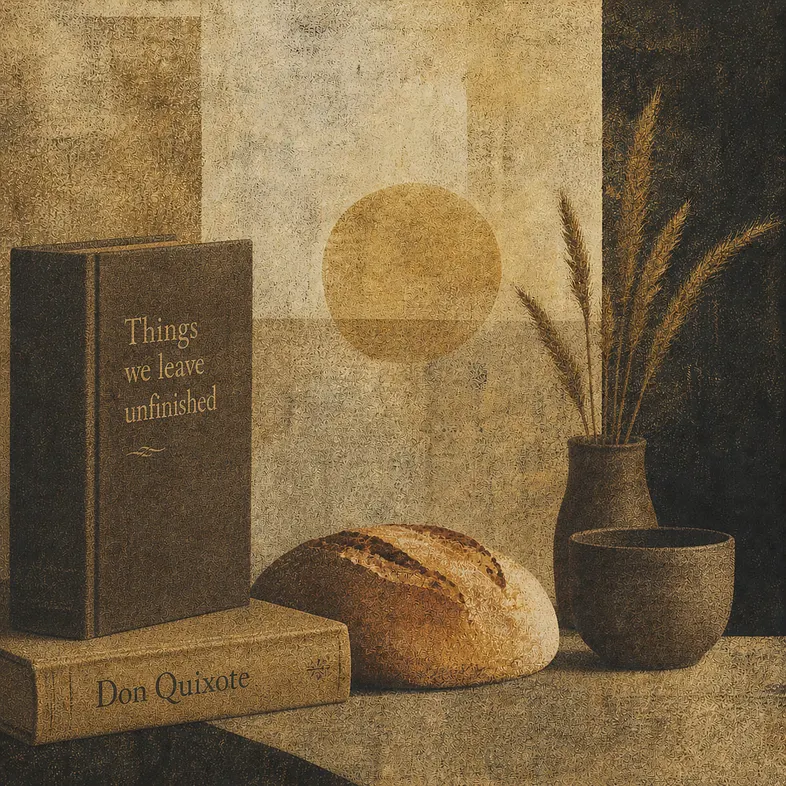
“You can’t eat without food.” Barng’ etuny
Hunger is a great pinch for our bodies, but can you eat without having food?
Our bodies ask plainly for food, and we must answer.
The mind, on the other hand, is less direct with its hunger pangs. It starves quietly and most ferociously. Bread cannot fix the yearnings of the mind; it yearns for something much more intrinsic, a thirst for wholesome thoughts, for language beyond the lingua of the mind, for something more than the weight of being merely alive.
This is why I read. Not simply to know more or to boast of a vast vocabulary, but simply to feel less empty.
But I must warn you, dear reader, that reading, as I’ve come to experience firsthand, is an almost insatiable hunger that cannot be quenched.
Now, I can only hope that when you read, you do not merely flip through the pages, but experience the slow burning that shifts your mind, thought after thought, and that you earn time by giving in to these calm merchants of knowledge and understanding.
Half Bread is better than None
Half beats none. You may not have read any of these books, well, I have, and I am always glad to write these reviews for you, and in a sense for myself.
“One does not write with one’s grey hairs but with one’s understanding, which often improves with the passing years.” — Miguel de Cervantes
I won’t swear oaths to convince you of anything. This piece is only the child of my mind, and like any parent, I want to believe it is beautiful.
Books, chess, green grass, horses, chocolates melting too quickly, cherry blossoms that never stay, wine, stillness, the bipolar weather of the city; warm now, cold later, the sky when it forgets its noise, water murmuring to itself somewhere unseen. These are the things that make even a reluctant mind begin to speak.
I read endlessly, but reading alone clutters the mind as much as it fills it. So I write. Reading gives me weight; writing lets me carry it. A dumbbell, you say? Perhaps. But it feels more like stepping into light wearing armor fragile, yet necessary.
And so, like Baruch Spinoza, I try these days to say things simply, without hiding behind cleverness.
You Can’t Taste It Till It’s Baked

Paths are made by walking — Franz Kafka
How else do you discover what you love if you don’t follow it all the way through?
Any obsession, like reading, keeps you on edge, forever chasing the next turn of the page
If you’ve never felt it, reading will always seem excessive to you. I used to think hobbies like reading or chess were a kind of waste; beautiful, maybe, but useless. Chess became an escape first, books came later, and stayed longer. Even while obsessing over chess, I had to read chess materials, or shall I call it study? Either way, I have never been completely away from inked pages and scribblings.
One life is too short for true wisdom, but in books, you borrow minds, argue with them, live beside them. You can disagree with Tolstoy, interrupt Dostoevsky, and close the book as if ending a conversation. Books extend beyond the pages; they broaden your horizons, shift your worldview, and make you more attentive.
“Are you okay?”
A straphanger asked me once on the M train. I wasn’t, my mind left the train, but not in any way that could be explained. A sentence had just undone me so precisely, so suddenly, I had to close the book and stare at the ceiling as if something had shifted above me. In that moment off the page, I realized I was living another life beyond the circumference of that train; I was teleported outside myself, and I watched my life in retrospect and understood who I was becoming.
I am still becoming. Now, I have started keeping track on Storygraph to remember where my mind has been.
March left me with six books, six rooms I entered, sat in, and did not leave unchanged.
The Perks of Being a Wallflower — Stephen Chbosky
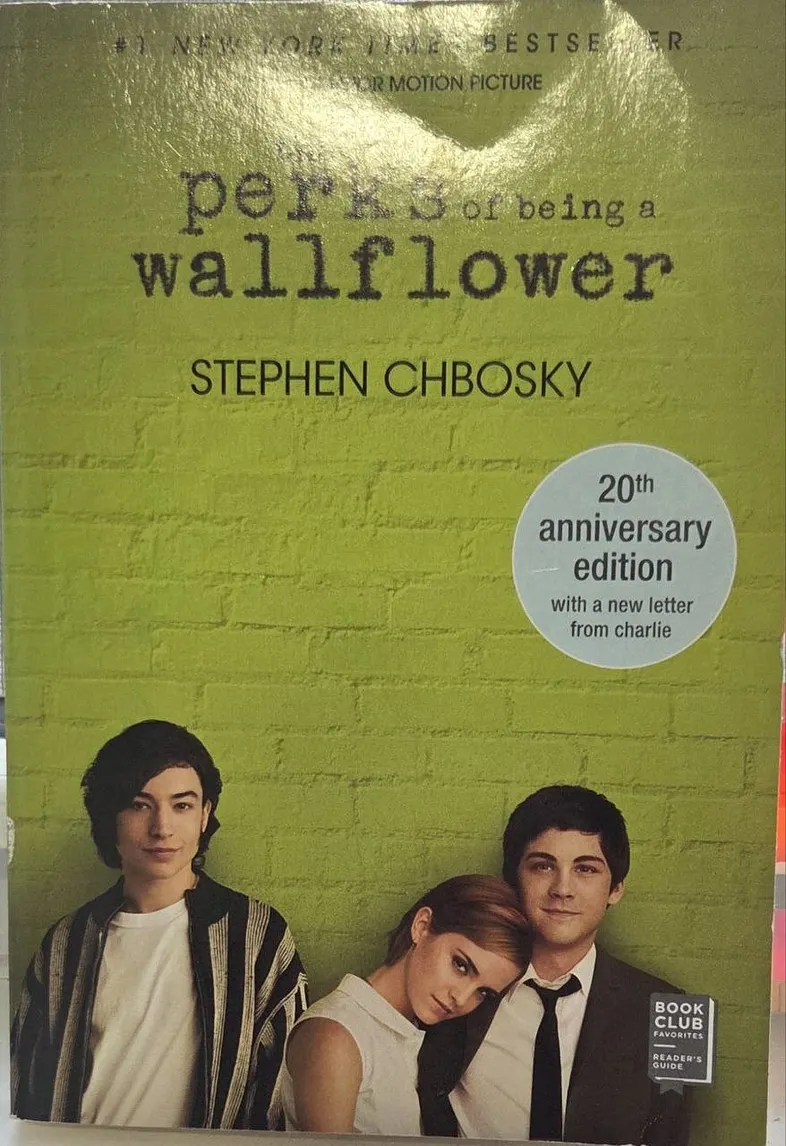
In Stephen Chbosky’s The Perks of Being a Wallflower, the story unfolds calmly, but carries a deep emotional weight. It’s a coming-of-age novel that explores identity, mental health, trauma, and the fragile, often confusing search for belonging.
At its core, the book posits something simple but overlooked: that growing up isn’t merely about discovering who you are; It’s really more about undoing all those habits we picked up to stay invisible
There’s a sharp bluntness with which the book views relationships. This is something that stuck with me. We often believe we can change others, especially when in love. But, even if we succeed, the results aren’t always what we imagined. Somehow, the challenge of getting people to change disappears, since they have now changed, and with that, the thrill and excitement of that relationship goes. Real change has to come from within. Everyone arrives at that realization in their own time; some sooner, some later, some not at all.
The novel also captures the theme of avoidance. Sometimes, thinking becomes a substitute for living. We analyze, reflect, and observe, but in doing so, we hold ourselves at a distance from experience, from the actual doing. It feels safer, but it keeps us from truly participating in life. More like being dough all day, but never becoming bread.
There’s also a subtle critique of comparison. When everyone is constantly measuring themselves against others, individuality loses its value. In this age, we tend to reduce people to rankings, and it overlooks their uniqueness. It’s simply an unfair and rather unwise way to view people.
Chbosky doesn’t shy away from emotional clarity either. If someone says no, but means yes, it isn’t a mystery; it’s confusion, or even manipulation. Games like that blur communication and create unnecessary hurt. The book leans toward something more grounded: honesty, even when it’s uncomfortable. This is something I have made a mantra for myself.
There is also the theme of control, where the author reveals it as a response to fear. The need to manage every outcome and to predict every turn comes from the belief that without control, everything will fall apart. But life resists that kind of certainty. Perfection is for the divine; sometimes, the wisest thing is to let things be after best efforts..
The novel powerfully reframes happiness: it isn’t reserved for other people, or for some distant version of life. It belongs to all of us, in the present. We may not control how everything ends, but we do shape how we live along the way.
In the end, The Perks of Being a Wallflower offers a subtle message of small truths. It’s not an overwhelming read; it’s the kind of book that clarifies the gaps in thinking and connects dots that we didn’t dare to explore fully.
It reminds us that being a “wallflower” isn’t just about standing on the sidelines. It’s about learning, slowly, how to step into the world and stay there.
The Things We Leave Unfinished — Rebecca Yarros
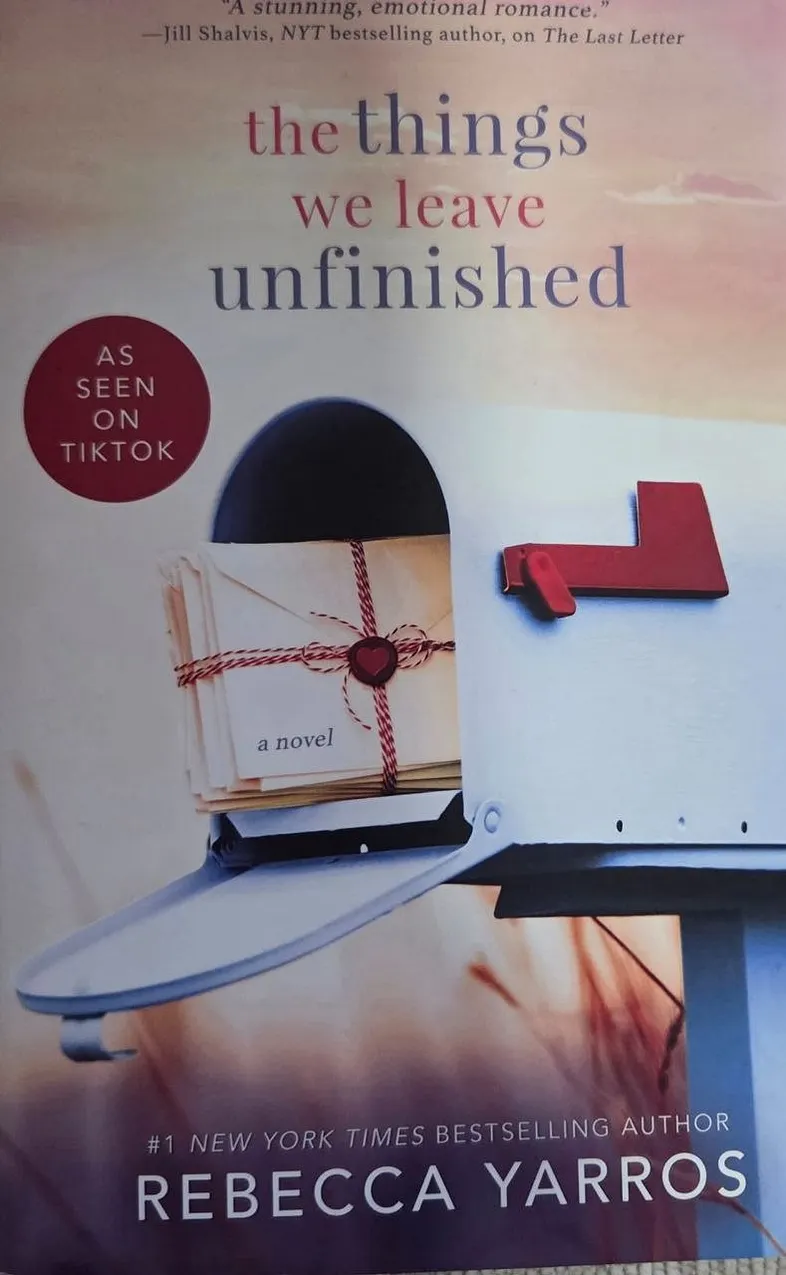
The Things We Leave Unfinished is the kind of story that lingers long after the last page. It’s a contemporary romance, but calling it just that feels too simple. At its heart, it’s two love stories, one set in the present, the other during World War II woven together with intensity. Across time, they echo each other in ways that feel both inevitable and heartbreaking.
The novel moves through themes of love that endure beyond circumstance. The book also touches on loss and grief, how they reshape us, and on unfinished stories that refuse to stay buried. It asks what we owe the past and whether truth is ever as clear as we want it to be.
What stands out most is how the author exudes a solid understanding of love. Romance here isn’t about fantasy or quick sparks. It’s not about being perfect or doing big, showy things. It’s about choosing each other every day, even when it’s hard, especially when it’s hard, and getting through life together, like everyone has to in their own way, but together.
Rebecca Yarros also shows depth in understanding people in this book. It’s truly easier to charm your way through a thousand shallow connections than it is to know one person in depth; to understand them, to see their wounds, and to stay. But this requires depth and effort, and many of us are too lazy, so we stay at a superficial level. Depth calls unto depth.
Grief is also a theme in this book, as we know, grief follows no rules, it’s powerful and unpredictable. Some memories feel too fragile to revisit, but even buried, they still shape us.
Tragedy leaves marks, too. It can break something gently and piece it back together unevenly. Some people come out stronger, others carry sharp edges that never fully soften.
We all make mistakes, and they can define us for a while, but what matters is recognizing them, not living in them. Life is too short to miss the moment, and too long to face it alone.
Writing feels easier, maybe even safer, you can say exactly what you mean. All people have to do is read, which feels rare these days. Even then, stories are never truly finished. You don’t really get to complete them. That’s how this book felt to me, like the author still had more to say.
Don Quixote — Miguel de Cervantes
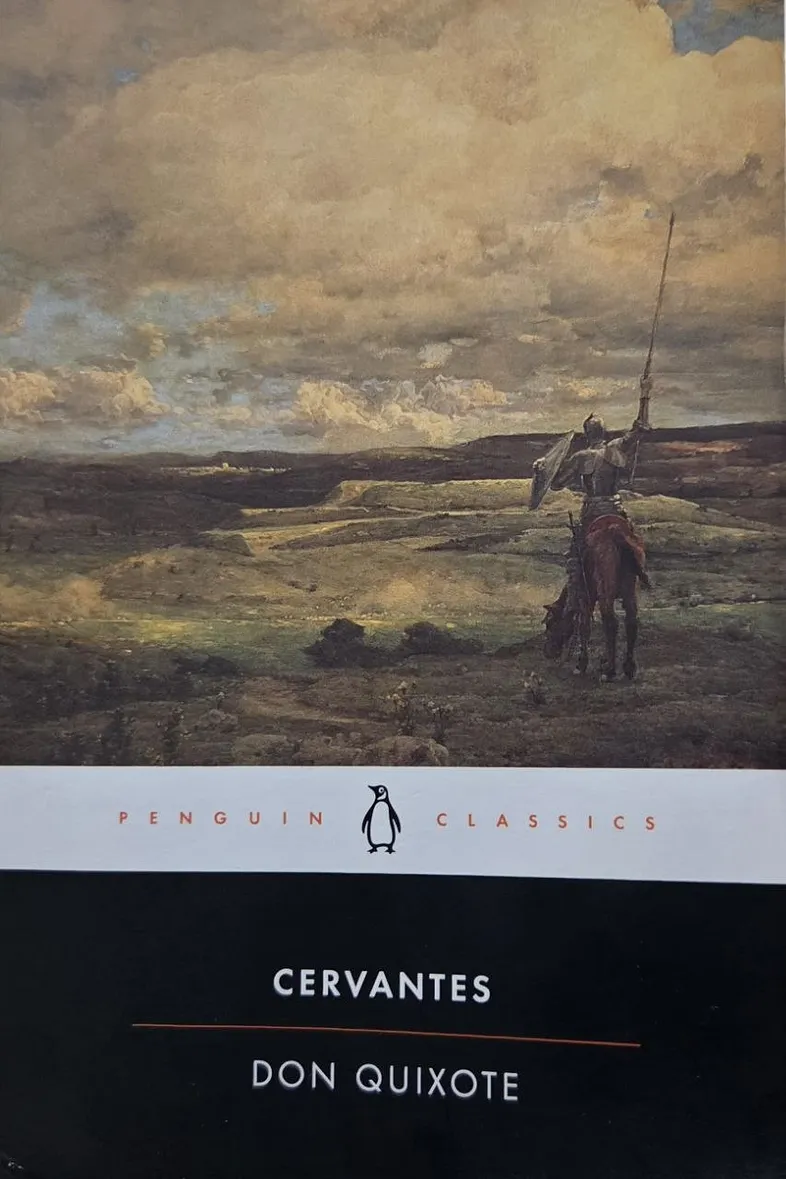
“The truth may be stretched thin, but it never breaks, and it always surfaces above lies, as oil floats on water.” — Miguel de Cervantes
Miguel de Cervantes’ Don Quixote is at once satirical and philosophical, episodic yet deeply unified in spirit. It moves between comedy and realism with ease, constantly questioning how we see the world and whether what we see is ever truly real. Even though Don Quixote seems delusional, it’s one of the greatest classics every reader should peruse in a lifetime.
The novel wrestles with the power of books: how they shape perception, inspire dreams, and sometimes distort reality. It lives in the tension between madness and sanity, between who we are and who we choose to become. Through its wandering narrative, it also becomes a quiet meditation on time, decline, friendship, loyalty, and the fragile act of self-creation.
Life, as Cervantes suggests, teaches through blows. Experience has a way of revealing our limits, wearing down the illusion that we might fully live up to our dreams. And yet, hope is stubborn; it doesn’t disappear, even when reality insists otherwise.
Stories themselves endure because they tap into something deeper. They either reflect timeless archetypes or create new ones. Epics, tragedies, and oral traditions repeat and reshape the same human truths, proving that while circumstances change, the core of human experience does not.
Cervantes places great weight on honor and virtue, treating them as the true adornments of the soul. Without them, even beauty loses its meaning. Poverty may obscure dignity, but it cannot erase it. Where virtue still glimmers, even faintly, it draws recognition from those who know how to see.
Fortune, too, is never absolute. Even in adversity, it leaves a door open, a possibility for remedy. But survival requires discernment. There is wisdom in knowing when to withdraw, when to wait, and when not to risk everything in a single moment. Prudence, after all, is not cowardice but foresight.
The novel is equally sharp in its observations of society. Wealth attracts attention, sometimes admiration, often scrutiny, while poverty is overlooked or dismissed. Hypocrisy thrives in such spaces, fed by gossip and human weakness. And yet, true worth lies elsewhere, beyond appearances, beyond status.
There is also a recurring insistence on balance: between justice and mercy, severity and compassion. A good judge, like a wise person, knows when to bend and when to stand firm. Justice loses its dignity when it becomes cruelty, just as mercy loses its value when it abandons truth. Cervantes reminds us that self-knowledge is among the hardest things to attain. To know who you are and to remain true to that knowledge is no simple task. The world will test you, often by probing your weaknesses. Once exposed, they become the very points through which you may be undone.
Love, too, as expected, Cervantes treats with realism rather than illusion. It thrives in joy and fulfilment but struggles under the weight of poverty and need. Hunger and hardship are not just physical conditions; they erode the very space in which love can exist.
There is so much wisdom scattered in the novel’s reflections: that a gift’s value lies in its nature, not in the act of giving; that foresight protects us from unseen enemies; that compassion should not cloud justice, but deepen it.
Above all, Don Quixote carries a quiet, sobering truth: nothing human is permanent. Everything moves toward decline from the moment it begins. Lives, ideals, even dreams, they all change, fade, or fracture with time.
Thinking 101: How to Reason Better to Live Better — Ahn Woo-Kyoung
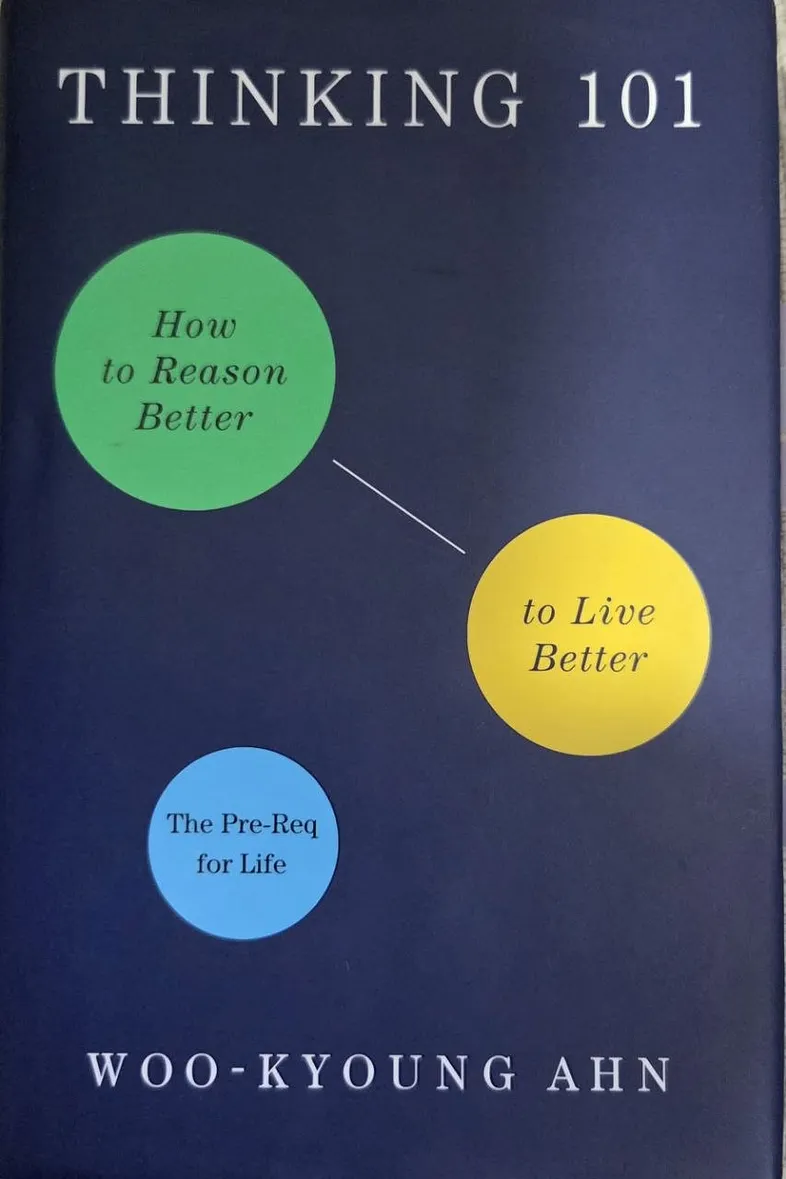
Metacognition is a very important component of cognition
In Thinking 101, Woo-kyoung explores how the mind works theoretically, and in the small, everyday judgments that quietly shape our lives. It’s a psychology-based guide to thinking better, grounded in the idea that clearer reasoning leads to better living.
At the heart of the book is a simple but unsettling truth: our thinking is far less rational than we believe. Cognitive biases influence how we interpret the world, often without our awareness. We don’t just misunderstand things, we misunderstand how well we understand them.
One of the most striking ideas is the illusion of understanding. The more smoothly something is explained to us, the more we feel we truly grasp it. This “fluency illusion” doesn’t just apply to skills like dancing or speaking; it extends into knowledge itself. When we understand how something came to be, we give it more credibility, even if that understanding is shallow.
Life resists our need for certainty, we simply cannot understand everything. Unexpected events are not complete mysteries; they are “known unknowns.” We know something will happen; we just don’t know what. That unpredictability is one of the few constants we can rely on.
In navigating uncertainty, data proves more reliable than instinct. Predictions grounded in evidence consistently outperform those shaped by intuition or wishful thinking. Still, we are drawn to what feels right rather than what is right. This mostly comes from how our minds process information. Vivid, concrete examples stay with us because they are easier to understand, more persuasive, and harder to forget than abstract explanations. A single striking story can outweigh volumes of data, not because it is more accurate, but because it is more memorable.
This ties into another bias: we judge how common something is based on how easily it comes to mind. If an example is readily available in our memory, we assume it happens often. Our perception of reality becomes less about actual frequency and more about mental accessibility. Negativity deepens this imbalance. We give more weight to negative experiences than positive ones. Loss, criticism, and failure linger longer, shaping our decisions more strongly than success or joy. It’s not a flaw unique to individuals, it’s a built-in feature of how we process the world.
What Thinking 101 ultimately offers is not a promise of perfect reasoning, but a call for awareness. To think better is not to eliminate bias, that’s impossible, but to recognize it, question it, and occasionally step outside it.
Better thinking doesn’t mean always being right, it means being a little less wrong, a little more aware, and a little more honest about the limits of our own understanding.
Phantastes & Lilith — George MacDonald
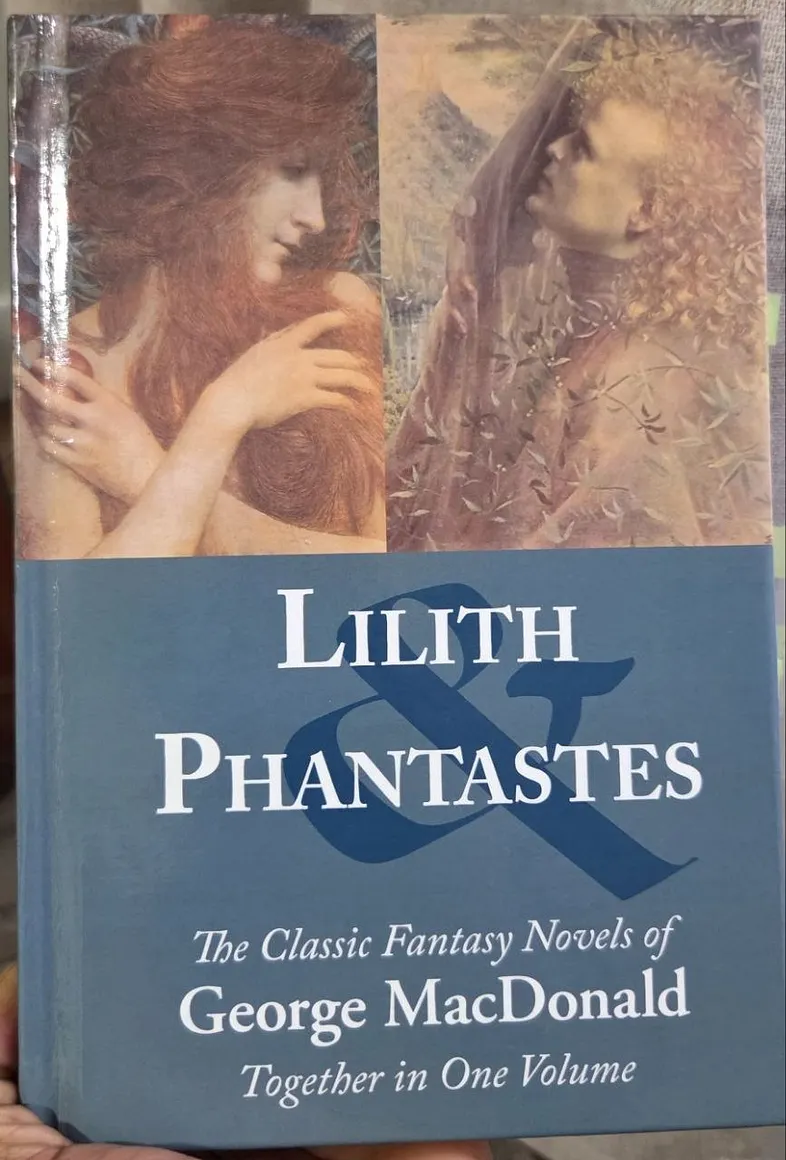
The fantasy of George MacDonald isn’t the kind that offers easy escape. Phantastes and Lilith are something quieter, stranger, fantastical on the surface, but deeply spiritual and symbolic underneath. These are not stories you simply follow; they are journeys you move through, often without clear direction, where meaning reveals itself slowly, if at all.
They challenge the very idea of certainty, place, identity, and even reality feels unstable. “Whereness” is not something you’re given; it’s something you grow into. You don’t discover where you are by observation alone, but by learning how to belong, by making yourself at home in the unknown.
There’s a persistent warning running through these works: growth without awareness leads to distortion. Being “small” does not protect you from becoming foolish; in fact, it may only delay it. Development must align with something deeper, life and law cannot be so opposed that perfection comes from resisting growth itself.
MacDonald is equally wary of knowledge; it is not inherently noble. In the wrong hands, it corrupts further, in the right hands, it refines. But before teaching others, one must first confront oneself. The desire to do good is not enough, without self-understanding, even good intentions can cause harm.
Reality, in these stories, feels dreamlike and almost unsettling. Whether waking or dreaming, everything appears uncertain, as though existence itself is only a shifting surface. Yet this uncertainty is not emptiness; it is a challenge. If nothing can be fully grasped, then wisdom lies not in certainty, but in humility.
MacDonald pushes back against easy assumptions. The idea that “a little knowledge is dangerous” is itself too simple. All knowledge is partial. Even the greatest understanding is still small in the face of everything that exists. The danger lies not in knowing too little, but in believing what we know is enough.
Human nature, too, comes under quiet scrutiny. We resist belief at first, yet repetition can convince us of almost anything, even what we once found absurd. And desire, when fulfilled without restraint, can overwhelm us. There is something precarious about getting everything we want; unchecked happiness can be as destabilizing as sorrow.
There is also an ideal threaded through these works: a balance between thought and character. “High erected thought” must rest in a heart shaped by courtesy, intellect alone is not enough without gentleness, humility, and grace.
Perhaps the most challenging idea is MacDonald’s view of good and evil. Good, he suggests, is always at work, even when it appears otherwise. What we call evil may simply be the only form the good can take in a given moment, for a particular person, under particular conditions. It’s a perspective that demands both courage and simplicity: the willingness to trust that meaning exists, even when it feels hidden.
In the end, Phantastes and Lilith don’t offer clear answers. They unsettle, provoke, and reshape the very fabric of your mind. They ask you not just to read, but to reflect, to question what is real, what is good, and whether understanding is ever truly complete.
And now to the last book reflection.
The Expectation Effect — David Robson
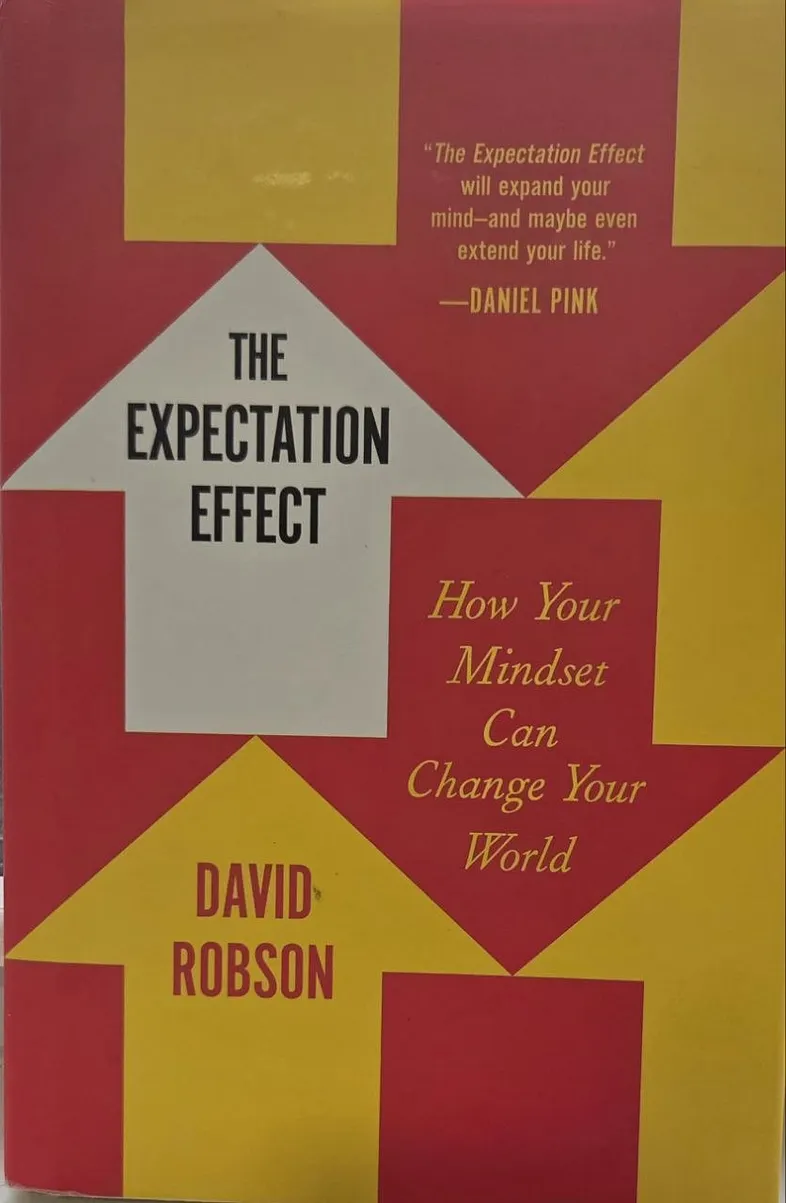
We do not see things as they are, we see them as we are.
In The Expectation Effect, David Robson shows a simple idea: what we expect shapes how we feel, act, and even what happens to us. We don’t always notice it, but our beliefs color how we see the world.
This shows up in the body, too. The placebo effect and nocebo effect prove that belief alone can help or harm us. If we expect the worst, we can make things feel worse. But noticing these patterns can help us break them. At the same time, the mind is capable of remarkable strength. In moments of crisis, ordinary people sometimes display extraordinary physical power, what’s known as “hysterical strength.” It’s a reminder that our perceived limits are not always our actual limits.
Belief can push us forward or hold us back. Confidence helps, but too much of it can hurt if it’s not grounded. And other people’s opinions matter too — they can shape what we think we’re capable of.
He also suggests we rethink ageing, not just as decline, but as growth in experience and stability. And through it all, self-compassion matters more than being harsh on ourselves.
In the end, the message is simple: our expectations are always shaping our lives. The key is becoming aware of them so we can shape them back.
I hope these half-loaves are enough to fill the pangs of curiosity for you. I remain your chill sojourner in the terrains of books. Till next time, keep becoming.