
Time is a river that carries me away, but I am the river. — Jorge Luis Borges
I enjoy having steak, but should that make me a chef?
I enjoy music, but does that give me the credibility to be a musician?
I love winning at chess, but does that mean I should hate defeat?
I love reading, but does that mean I am obliged to write?
Methinks that enjoyment is appreciation, not a mandate to become, perform, or define oneself by what one loves. This is one paradox I have discovered in my exploration of life. Sometimes staying on the calm side of experiencing things is bliss; we don’t always have to be performative. You may think this is lazy, but I am half-wise enough to understand that sometimes stillness is the most accurate move.
Filling Voids with Books
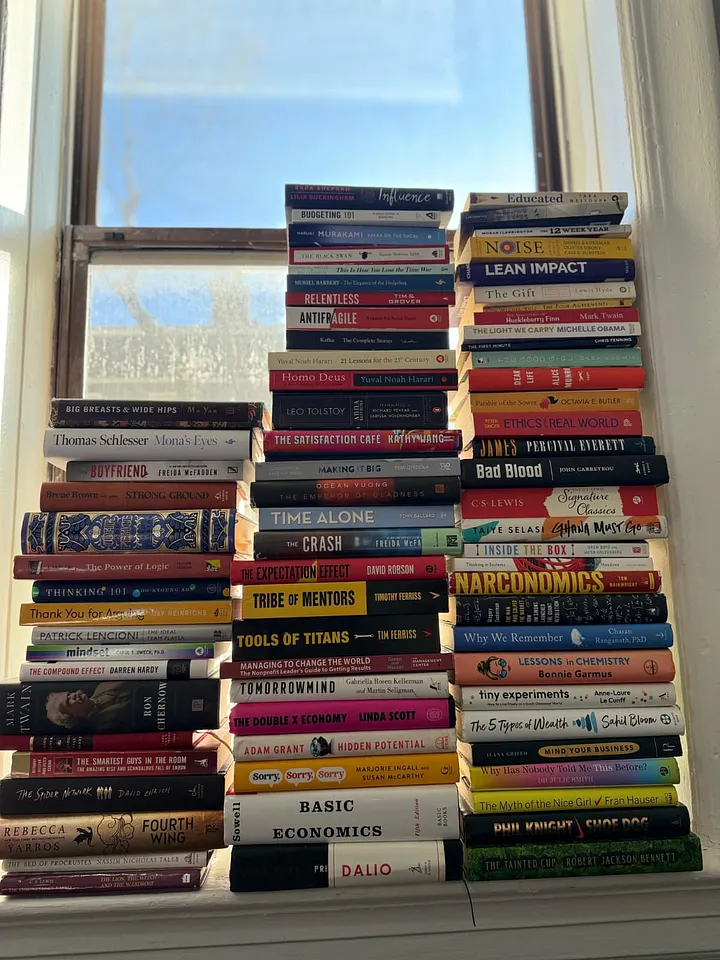
Fiction resists simplification. It unsettles the categories we rely on to make the world legible.
If I had a dollar for every time I’ve been asked about my reading list, I’d have enough to buy a whole new library. I never quite know how to answer that question; for me, reading is not a matter of taste but of curiosity. I try not to be picky with books; I find them all fascinating, and I have an insatiable appetite, so I have a taste for different genres.
Fiction, I have found, helps me change how I move through the world, providing me with perspectives I could not have imagined, an understanding of the complexities of alternate realities, and a new sense of empathy and depth beyond the realms of reality.
Even merely thinking about fiction is such a thrill for me!
In fiction, when we say someone is from a city or from a country, there is always more to it. The labels are mostly insufficient; there are distinctions in context that will remain invisible unless one has lived them.
Fiction makes room for these subtleties and context, restoring texture where language feels bland.
Reading does not remove me from life; it sharpens my presence within it.
Books have been my anchor so far in the busy city of New York, where boldness is a currency. Being an outsider, inexperience settles you humbly, shaping how you interact. Social ease is a language in this part of the world; some people grow up speaking it without effort, while others, like myself, spend their lives translating, always aware of the accent they carry.
With my Western Nigerian accent, social ease did not come easily, or perhaps I cared less about ease, so I buried myself in the sophistication of books and read voraciously.
I understand now that a deeper language than social ease is sophistication. You can be born to be sophisticated, but there is a higher chance for one to develop eloquence in sophistication than to switch my Yourba accent to the rhotic American style.
The books I read this year kept me on the edge of my seat. They gave me words for things I felt but couldn’t always name. They helped me notice the quiet rules of belonging, things no one explains.
Over time, books have become more than a list of titles or shelf beautifiers; they have prompted in me the essence of patience, the art of listening, how to make sense of the world, and opened up my mind’s flexibility.
I don’t read to escape life, I read to understand it. Somewhere along the way, my bookshelf stopped being about genres and started becoming a collection of questions: How do people make choices? Why do systems break? What lasts, and how ordinary people try to build meaningful lives inside imperfect structures? I’m unravelling more questions.
Stories are important; they shape the architecture of perception, they influence what we believe, what we overlook, and prompt how we respond to the world around us. Stories aren’t merely sequences of events but frameworks through which attention and action are effected.
I’d tell you a story about an incident this summer.
When Missing a Train is Painless
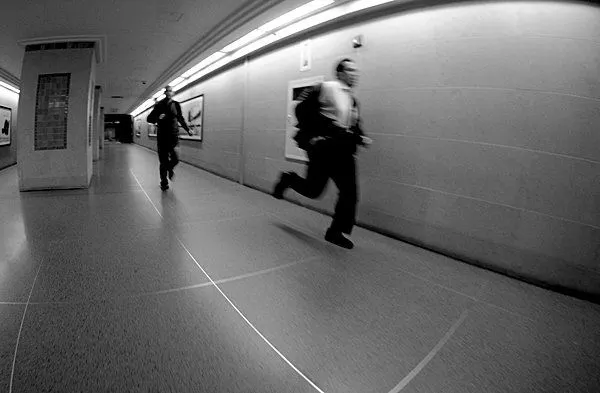
Missing a train is only painful if you run after it — Nassim Taleb
It was a hot summer Friday morning, and I woke up feeling overheated, even though the air conditioner was working hard. My body had been asking for rest for days, but I kept bargaining with it, Just get through today, the weekend is close. I was already behind schedule.
I skipped breakfast, took a long shower, whilst being lost in thought the whole time. After my shower, I threw on my Adidas Sambas instead of leather shoes because I knew I’d have to run; I always run when I’m late. I ran fast enough to catch the bus, and was lucky enough to catch the next train, slipping in just as the doors were closing.
Now, I am walking fast with my headphones blasting through my ears, the unique sounds of NF. My breathing was heavy, my chest tight, but I told myself to push.
And then, darkness, I felt the blankness of nothing.
I woke up on the floor with a police officer standing over me, asking if I was alright. A small crowd had formed, faces hovering in concern. Someone reached down and helped me to my feet. Instinctively, but almost foolishly, I checked for my AirPods before anything else. The officer asked if I had eaten, then told me to take it easy.
Only later did it become clear how much worse it could have been. I could have hit my head, I could have fallen onto the tracks, I could have died trying to arrive somewhere on time.
This moment became an epiphany for me. I have decided to pay more attention to health, and also, since that day, I haven’t chased trains hurriedly.
Missing a train is only painful when you run after it. The same is true of expectations, especially the ones handed to you by others. They hurt only if you decide they are yours to fulfil.
Not everything in life is fate; much of it is posture, how you move, how you pace yourself, how much control you claim over your time. There is an elegance in choosing not to rush, in deciding that your schedule serves you, not the other way around.
That summer rewired something in me. Now, with every relationship, every activity, I try to map the cost against the benefit. When the cost exceeds the return, I let it go. Some high-paying jobs are not worth the price they demand. Some pursuits take more than they give.
I don’t complain about that morning. It taught me something simple and lasting:
You don’t lose anything important by letting the wrong train go.
Now let’s return to books!
Some years back, I suffered from the malady of bibliomania; I was constantly buying and studying books, but now I am healed, and I take action and apply the lessons from the books to my reality.
Reading stopped being about self-improvement and became about orientation. I was looking for textured language, for the unease that comes with success, ambition that outpaces meaning, audacity that gives entry, and certainty that collapses under reality.
The next part of this article is a list and summary of ten books that opened up my mind intensely, a fine intersection of solitude, systems thinking, uncertainty, ambition, and the fragile business of being human.
Enjoy!
Anna Karenina — Leo Tolstoy
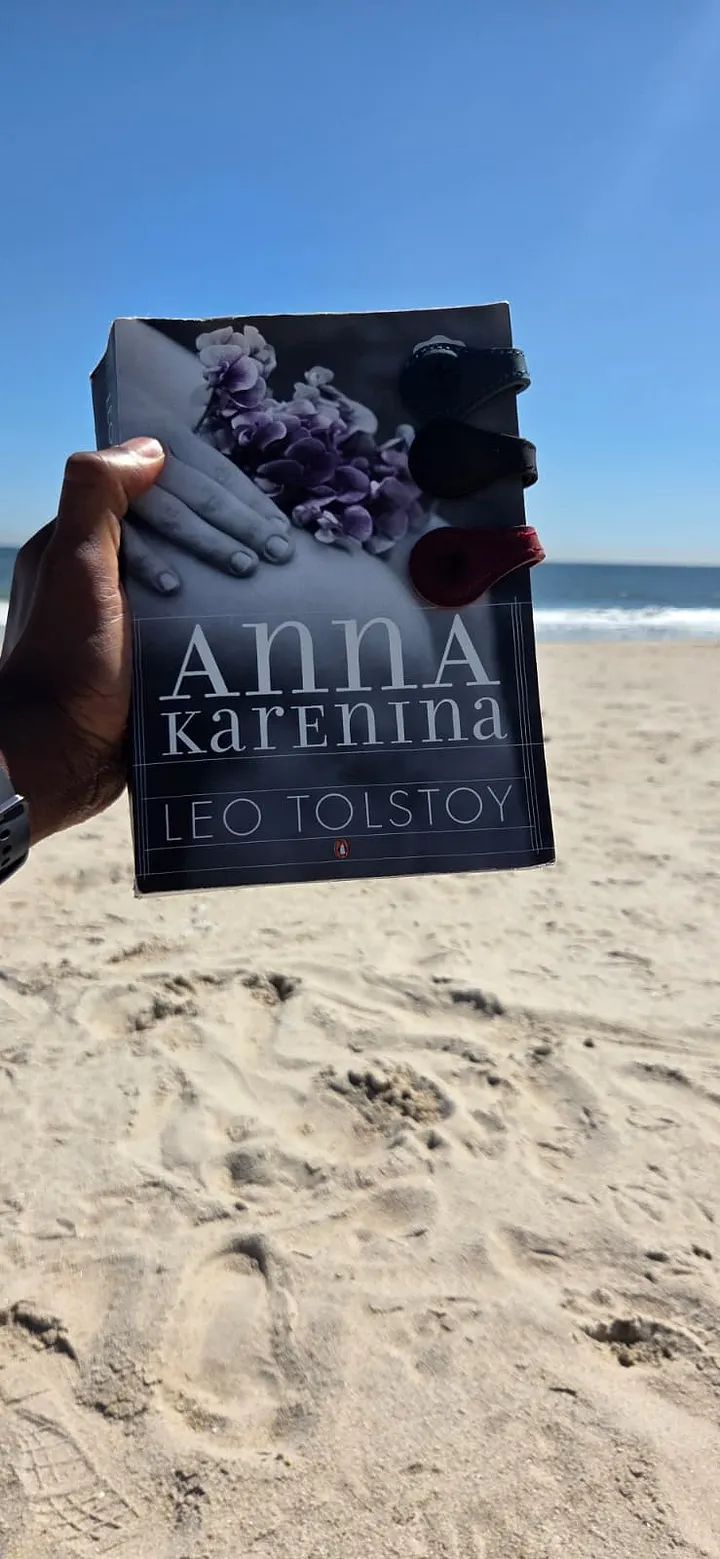
Reading Tolstoy feels like peeling an onion, layer by layer, until the human soul lies bare. He moves patiently through his characters’ inner lives, uncovering their emotions with language that is simple yet piercing. At times, you find yourself inhabiting their joys and enduring their torments as if they were your own.
Anna Karenina is an exploration of the violence of social expectations and the cost of living out of step with one’s inner truth; it is not merely a story of love or betrayal as most people think it is.
Imagine being married, loving your spouse, yet becoming consumed with passion for another. It is like passing a bakery when you are full and stealing a sweet roll simply because its fragrance is irresistible. Love, Tolstoy suggests, cannot be fully understood without mistakes, without the willingness to err, and then reconcile. As there are many minds in the world, there are many kinds of love, and each heart carries its own way of feeling it. Vronsky, in his reckless devotion, literally sacrifices everything to be with Anna.
Stripping away lust and physical attraction reveals clarity. Looking beyond immediate desire shows that compatibility rarely aligns with mere appearance. Tolstoy challenges the common illusion that happiness is the fulfillment of desire. He observes that women are often the central stumbling block to a man’s activity, not because of malice, but because genuine love demands time, attention, and emotional labor. Marriage offers one solution: a structure that allows love to coexist with life’s work, though it requires either complete harmony or irreconcilable discord.
Tolstoy also notes that respect often masks the absence of love. True clarity is not found in form, in satisfaction, or in the fulfilment of desire; it is found in love itself. One should not live for immediate needs, impulses, or attractions, but for something greater, incomprehensible, and transcendent — God, whom no one can fully define or understand.
This is an absolutely devastating, beautiful read!
The Satisfaction Café — Kathy Wang
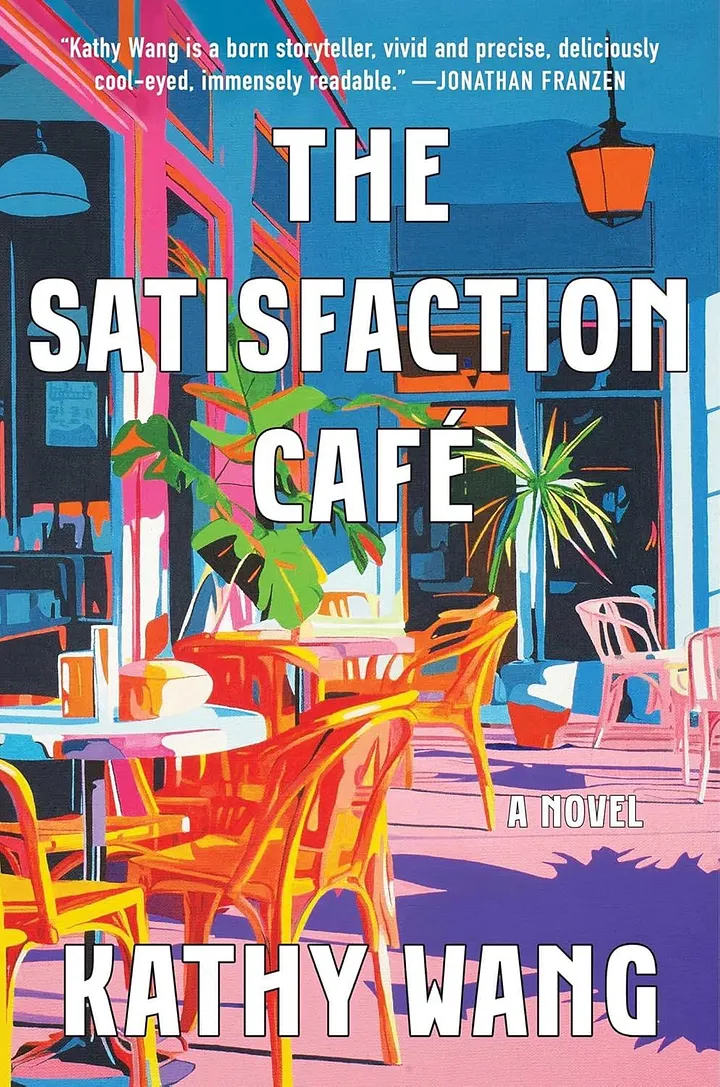
This novel captures a modern unease: the sense that you’ve done everything right and yet something still feels wrong. The protagonist attains what is conventionally desirable: prestige, stability, and approval, yet remains shadowed by a persistent dissatisfaction. What do we call this? Despair, failure? Is it worse than both?
At its heart is a belief many people carry when they’re young: that every door stays open, that no choice is truly final, that recklessness can be taken back later and rewritten as experience. The novel quietly, steadily dismantles that illusion.
We are drawn to the human idea/ longing that there are countless versions of our lives unfolding somewhere else, and that with enough care or luck, we might choose the happiest one.
This book suggests that happiness is not a fixed state waiting to be reached, but an unstable concept, something slippery and challenging to hold. Just when it seems secure, it dissolves.
What the book left me with was a clear, sobering understanding that when success is shaped mainly by other people’s expectations, it carries an emotional cost. You can postpone that cost for a while, but you can’t erase it. Sooner or later, it comes due.
Time Alone — Tony Ballard
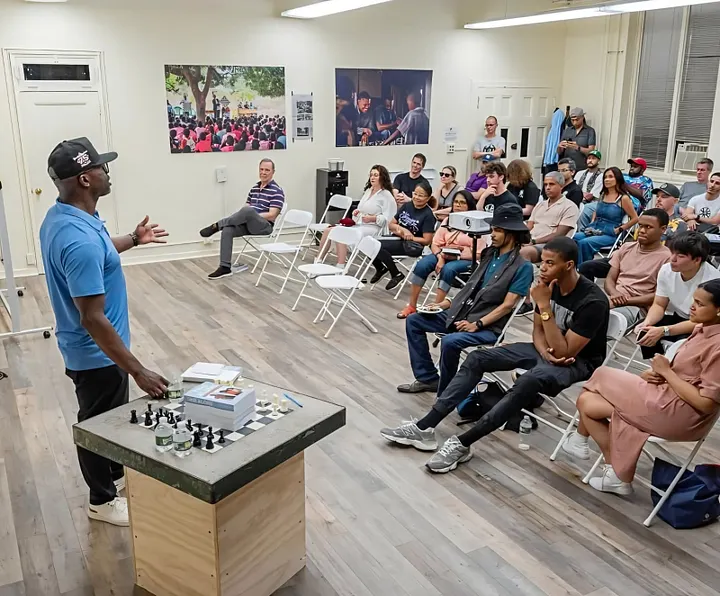
This was my first in-person book launch and signing. That night in New York City, Tony’s years of solitary work met me with conversation.
Even as a voracious reader, experiencing the author directly revealed something the book alone could not: Nothing beats the human presence behind the words. The way he narrated his own thoughts was a memorable experience.
Ballard reframes solitude not as isolation, but as a necessary cognitive space. In a world obsessed with visibility and noise, time alone becomes an act of resistance. It is where unfiltered thinking occurs, where ambition is questioned rather than performed.
He remarked that those serving time in a mental prison, while being physically free, are in a worse situation than those who are physically imprisoned, but mentally free. This statement has been stuck in my mind ever since.
This book taught me that clarity rarely comes in a familiar package; clarity is usually quiet, still, and mostly in aloneness. Also, the loneliness felt when alone, or when single, is nothing compared to the unease of being in the wrong environment or with the wrong person.
True solitude, Ballard suggests, is a space to think, to observe, and to become fully present with yourself.
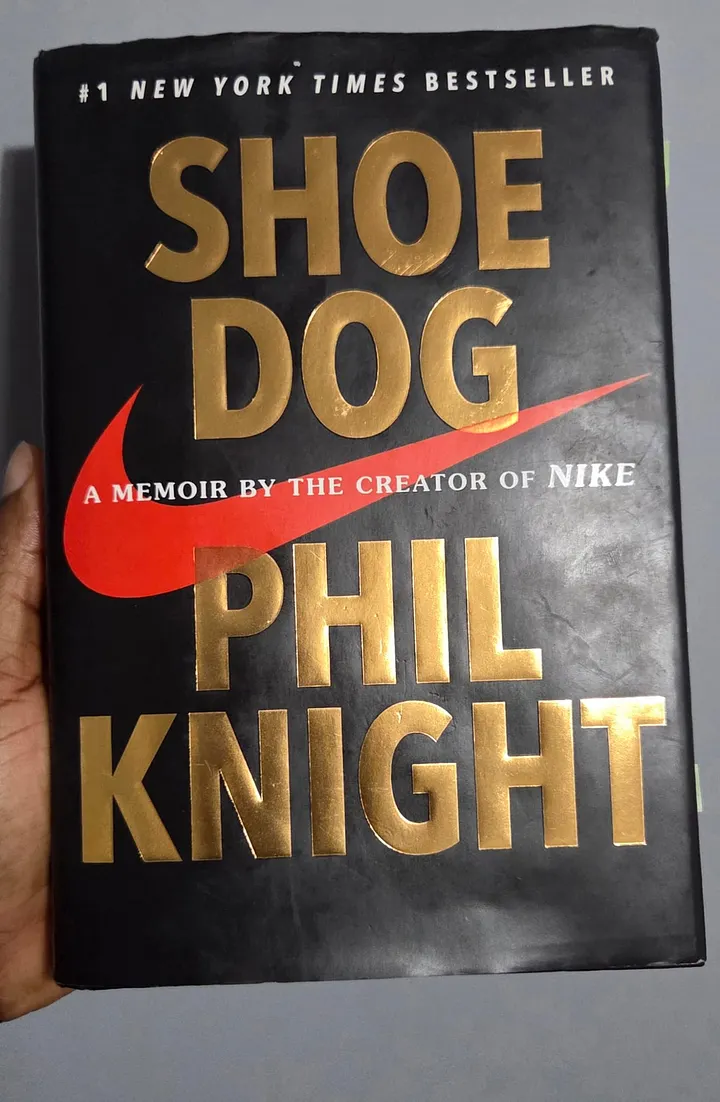
Shoe Dog — Phil Knight
Just do it.
This is not a triumphalist business memoir. Knight’s story is messy, uncertain, and anxious. The brand Nike was not built from confidence, as many of us like to think; it was built from persistence through doubt.
Like it or not, life is a game. Those who deny this truth or refuse to play are left on the sidelines, and that is not a place anyone should want to be. You cannot walk a path until you become the path yourself. Many assume competition is inherently virtuous, that it brings out the best in people, but it is only true for those capable of forgetting the competition long enough to focus on the work itself.
This book taught me that the most meaningful work feels fragile while in its process, not in its outcome. Linear thinking is an illusion, one of the many that fuels dissatisfaction.
Phil Knight said, “ Reality is nonlinear, unpredictable, and demanding. Our work, the creation of something from nothing, is the holiest part of ourselves. Just as God takes pride in his work, so too should we honor ours. Every craft, when pursued fully, carries a sacred dimension, and to neglect it is to neglect a part of ourselves.”
The Book of Disquiet — Fernando Pessoa
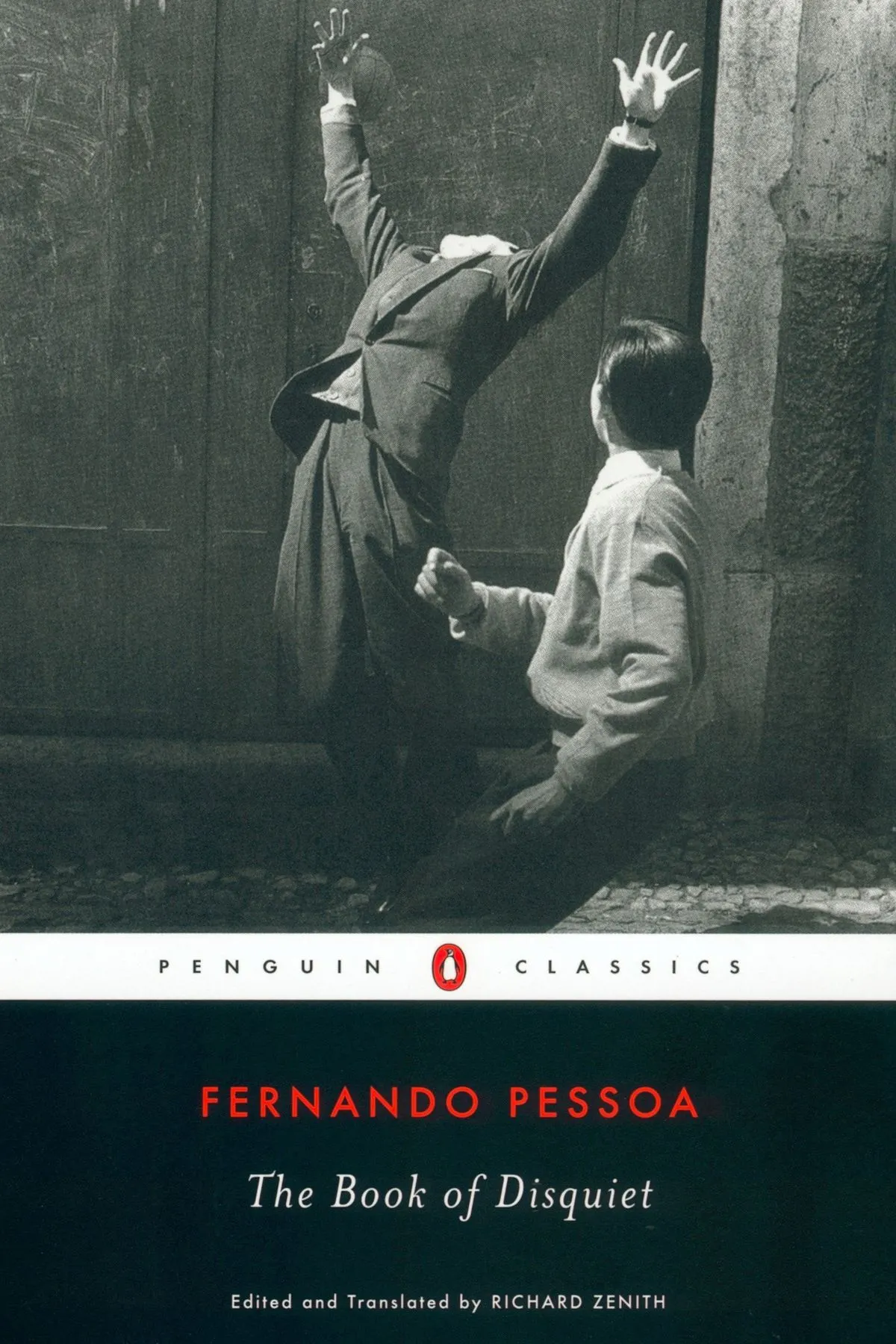
Pessoa is a master of fragments; he offers deep reflections. If it were not for sensitive, intelligent people pointing out the many flaws and follies of human nature, we might never even notice them. Yet those same sensitive souls often cause others suffering simply out of sympathy.
This is a book for those who think too much and feel too deeply. It is a meditation on identity, anonymity, and the strange melancholy of consciousness. Pessoa writes that to give someone good advice is to show a profound lack of respect for that person’s God-given capacity to err. We are truly ourselves only when we act in contradiction to the expectations, rules, or guidance of others. Freedom, he suggests, is possible only in isolation. One is truly free if one can withdraw from humanity entirely without longing for money, society, love, glory, or even curiosity. To live alone and feel complete is to be born free; to need others is to live in chains.
What this book taught me is subtle yet profound: the true value of study is in noticing what others have not said. Everyone is vain about something, and much of that vanity stems from forgetting that other souls are as complex and layered as our own. Everything we do, say, feel, or think is adorned in masks and elaborate costumes. We may strip away every layer, but we are never truly bare; nakedness belongs not to the body, but to the soul
The 5 Types of Wealth — Sahil Bloom
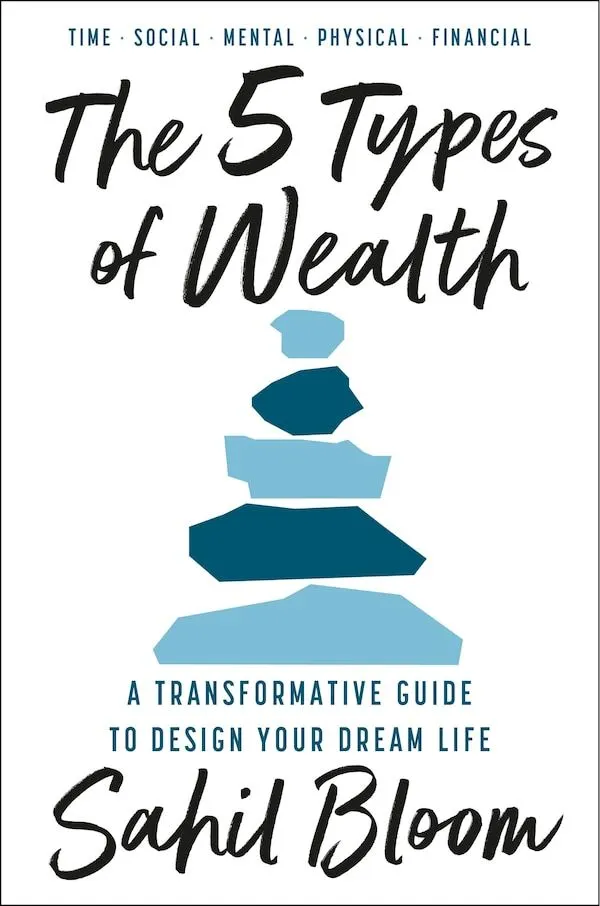
Curiosity keeps us happier, healthier, and more fulfilled. If curiosity were a pill, every pharmaceutical company in the world would call it a superdrug. It reminds us of the importance of mental health, intellectual growth, and emotional wealth.
There are no boring people, events, or things, only uninterested people. Bloom expands the idea of wealth beyond money to include time, health, relationships, purpose, and financial freedom. The insight itself isn’t new, but the framing is robust in a culture that too often equates success solely with income.
One story from the book hit me hard. Bloom recounts a conversation with a friend: he sees his parents about once a year. His friend asked, “So, you’re going to see your parents fifteen more times before they die?” Based on assumptions about age, fifteen seemed both countable and terrifying. It was a realization of how precious and limited our time is with the people we love. The wealth of time is having control over how we spend our hours with those who matter to us. It is one of the richest forms of wealth we can cultivate. It made me think of all the people who leave their families and hometowns in pursuit of financial success, like most immigrants. Some never see their parents again; some are lucky enough to.
What it taught me is this: a rich life is multidimensional. If you optimize one area too aggressively, the others inevitably suffer. The pursuit of “more” should never blind us to the beauty and sufficiency of what we already have.
Kafka on the Shore — Haruki Murakami
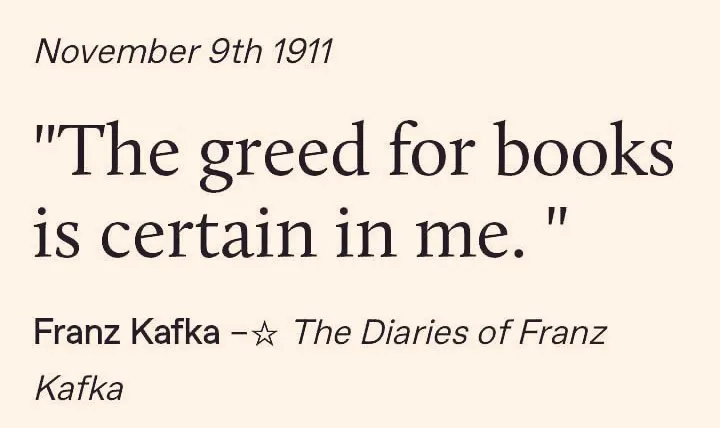
If you don’t know Murakami, well, his stories catapult readers into surreal landscapes, vicariously narrating events through cats, parallel worlds, and mysterious figures; he invites his readers into an unexplainable world. This novel blurs identity, time, and logic, forcing the reader to relinquish the need for neat resolution. It mirrors the internal chaos we often conceal beneath rational narratives. As he suggests, when you emerge from a storm, you are not the same person who entered. Like the moon, we move through phases: sometimes hidden, sometimes fully revealed.
What this book taught me is this: not everything meaningful can be explained; some things must simply be endured. You cannot change the world, but you can shape your own destiny.
The Gift — Lewis Hyde
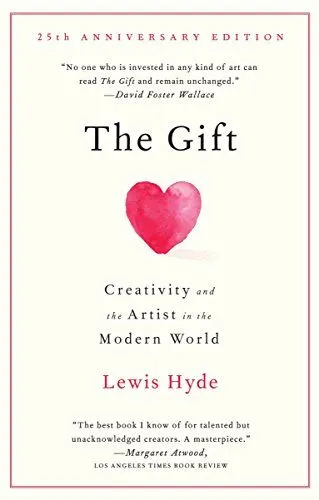
This book forced me to understand what creative burnout really is.
The artist speaks to a part of our being that is a gift rather than an acquisition, something enduring. As Joseph Conrad observed, few struggle more sincerely against their own doubts about the worth of their work than the artist.
Hyde examines creativity beyond the logic of the market. Some work, he argues, is meant to circulate, not accumulate. When art becomes purely transactional, it loses something essential — a sense of generosity, of life beyond measurement.
What the pages in this book taught me is that not everything valuable should be optimized or monetized. Too much stimulation can overwhelm the mind. Sometimes the most remarkable creativity arises when it is deliberately contained and preserved, rather than stretched thin in pursuit of external rewards. Creative burnout.
Labyrinths — Jorge Luis Borges
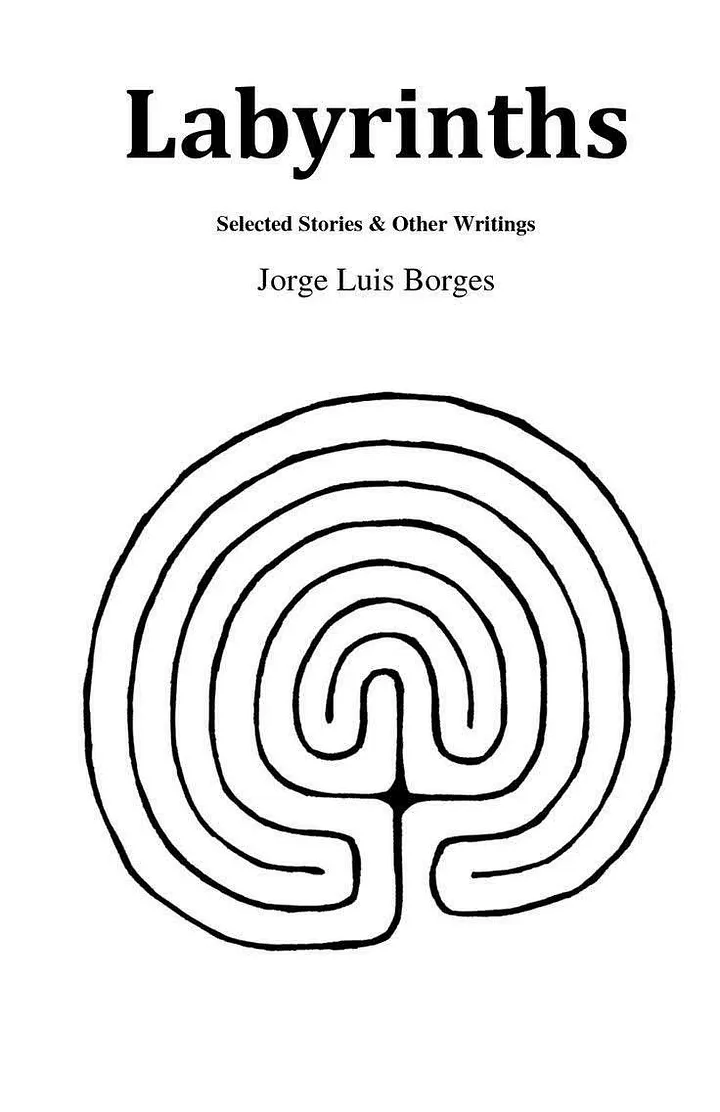
This book changed the way I think about change and the different stages of life. Not every butterfly comes from struggle, and not every difficulty teaches a lesson. Most scars don’t turn into wisdom, and hardship doesn’t automatically lead to greatness. Life doesn’t turn pain into beauty just because it expects you to grow from it. Whenever I recall Heraclitus’ ninety-first fragment — “you shall not go down twice to the same river”, I am struck by its dialectical subtlety. The first meaning seems simple, the river itself changes, but beneath it lies a quieter truth: I am not the same.
Borges builds his ideas like architecture. Time twists back on itself, identity splinters, and meaning often hides inside paradox. His stories seldom offer neat endings; they linger and echo. They push you to think, to question the assumptions you carry about reality and yourself. Even a mind that feels small or limited can reach beyond the irrational in ways both delicate and profound.
I learnt from this book that reality is far less than we pretend it to be, and that is not a flaw. A sweet thing that is overused loses its sweetness. Heraclitus’ river reminds us of impermanence. Transformation occurs only when we impose direction on chaos, not when we wait for life’s suffering to produce meaning.
Antifragile — Nassim Nicholas Taleb
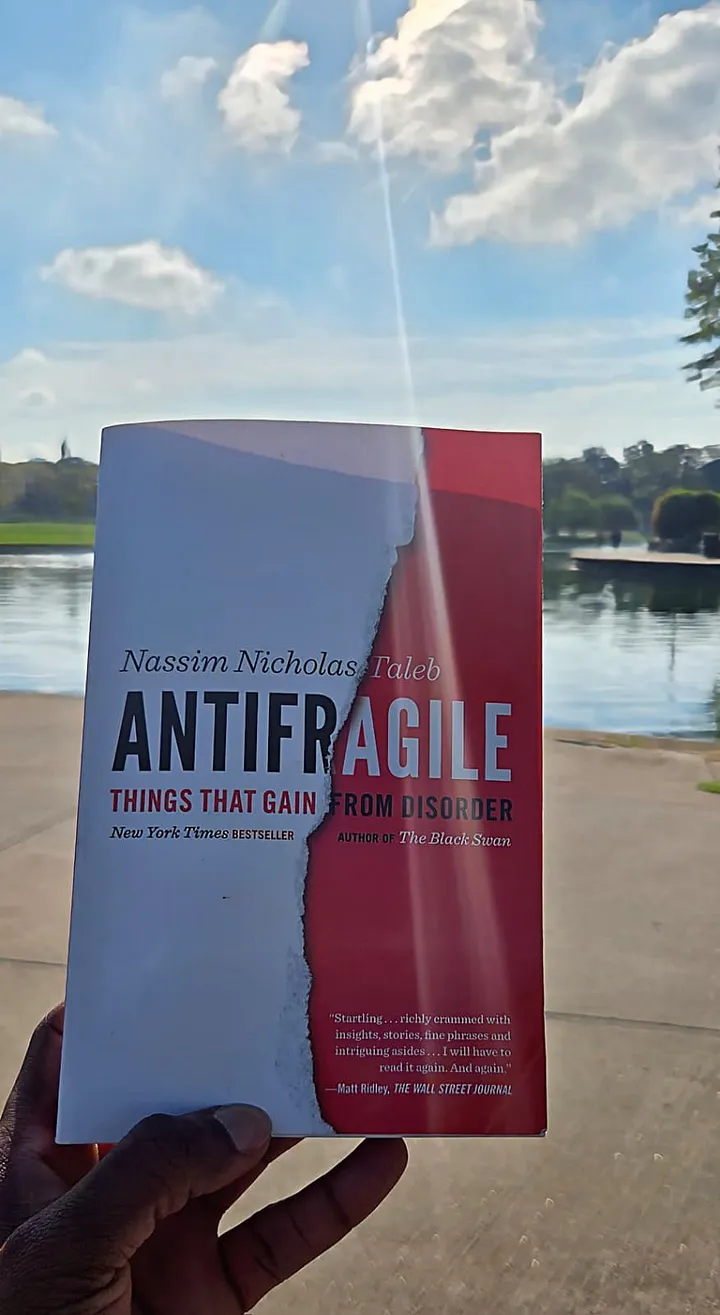
If The Black Swan diagnoses the problem, Antifragile offers a response. I remember a day at chess camp in Manhattan when my employer, Russel, pulled me aside and said, “Ayo, you have to be aggressive.” A nudge. Life favors those who act, not those who overthink. Hesitating when the choices are balanced is a kind of weakness. In a world without certainty, a little irrationality is how decisions learn to move.
Taleb illustrates this with Buridan’s donkey, a classic thought experiment on decision-making, free will, and determinism. A donkey, equally famished and thirsty and placed precisely midway between food and water, will die if it acts only on rational self-interest. Without a differentiating factor, a random nudge, an element of indeterminacy, nothing can save it. Paralysis by analysis is fatal.
From this, Taleb suggests that, in certain situations, irrationality, chance, or improvisation is not only practical but necessary.
Some systems break under stress, others benefit from it. Life, he argues, should be designed to gain from volatility, not fear it. Exposure to uncertainty can reveal our resilience and help us adapt.
Closing Pages
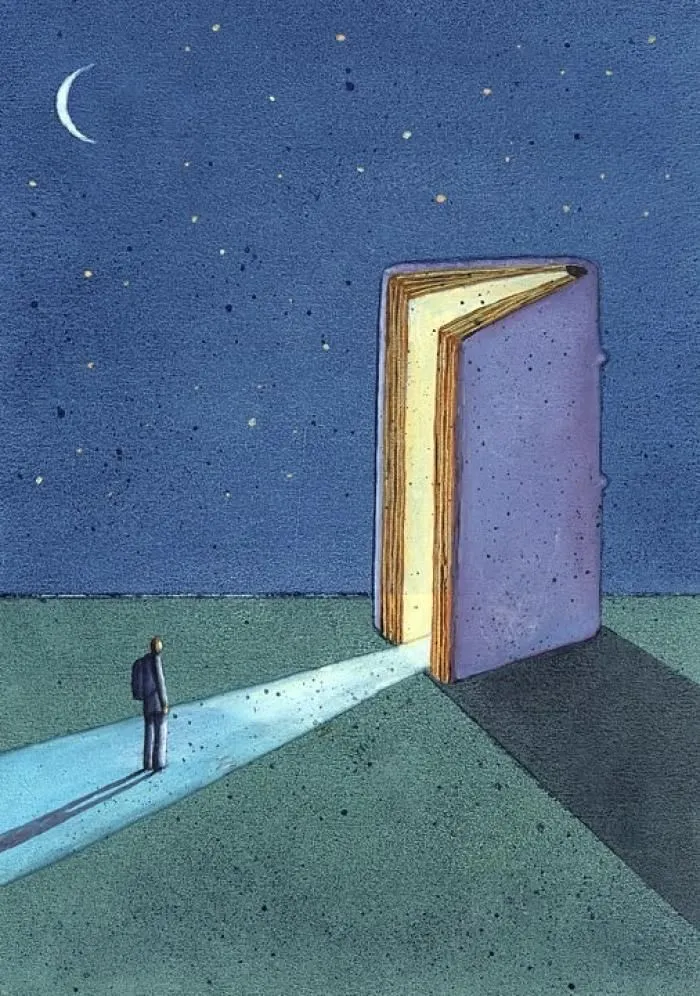
Books will perpetually be my most cuddly companions, fillers of my void, and my keenest teachers.
In books, disasters are always beautiful because no real blood is shed, nor do the dead rot; in books, not even rot is rotten.
Dear reader, I hope this panoply of pages, chaotically, soothes your soul as it has mine. For sure, these books don’t offer answers or reinforce optimism, but if you dare to sit with them in uncertainty, they might spark up new essences for you.
Please consider adding any of these books to your reading list in 2026.
From your humble thinker, writer, chess-head, and coach, I hope you have the most fantastic year yet!