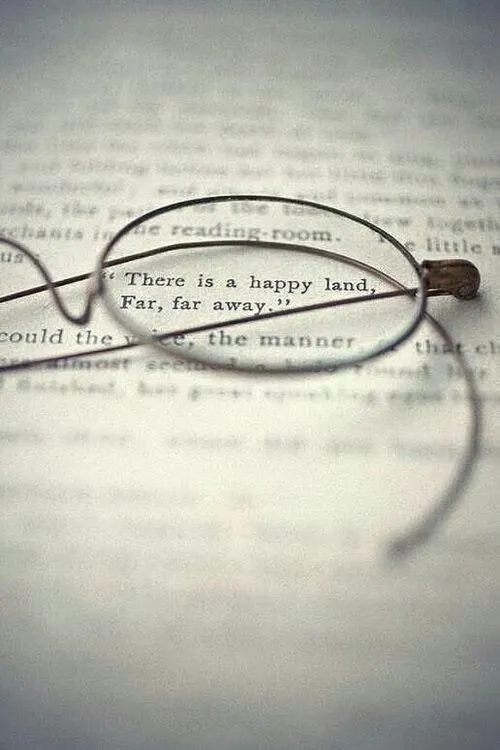
Literacy is a bridge from misery to hope — Kofi Annan
Reading solves a perpetually unmet need: The need for curiosity, which I have found stays unmet regardless of how much we stay swamped and sunken into books. We just can’t know it all, but at least we can try, winks!
For me, reading is a habit I have enjoyed; it’s more than a need I hope to satisfy, for me, it’s a pleasure. I read to understand the human condition, what we call Love, how humans endure, how we fail, and how we thrive. Humans are an interesting species, and I remain glued to our caprices. Sometimes, I try to stay away from the drama of humanity, even in the books! So, sometimes I also read to explore the spaces beyond the Milky Way.
It’s a new year, and we have lavishly granted ourselves a blank tab, and as is our custom, we set goals. Well, for me, it’s simple in terms of books. This year, I’ve decided to pay attention not just to the act of reading, but to what lingers after the last page, and what quietly reshapes me from the books. In the spaces between work, life, and the ordinary, reading is where I meet my unmet needs, explore questions, and confront the margins where meaning often hides.
But once I’ve read, I have to return to living. These books should shape how I live, or at least how I think, yes? Of course, I surely hope it is so in retrospect.
The Art and Act of Reading
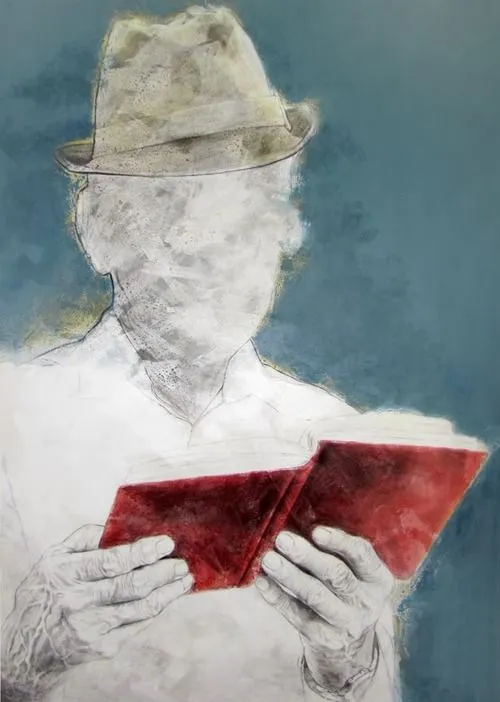
While doing things or in the interstices between doing things, we do other things, less obvious things. — The Psychopathology of Everyday Life by Sigmund Freud.
Is reading a less obvious act?
Freud argues in The Psychopathology of Everyday Life that much of our mental life unfolds in the margins, in slips, pauses, and seemingly insignificant moments.
When we talk about doing things, we usually mean visible productivity, goal-oriented tasks, and outcomes that others can measure. However, reading often happens between appointments, before sleep, while waiting, commuting, recovering, alongside life, rather than at its centre.
The mere act of reading is an art, and art does not leave the heart as it was. Reading is an art of refinement of one’s mind.
I read in the spaces between work, in sleepless hours after playing unnecessary bullet chess to wile away time, I read on the train, lost in the pages of the books, but I welcome nearby straphangers to peek into my books, I read to live.
This year, I’ve decided to read with structure; six carefully curated books a month, chosen deliberately, feels less like a goal and more like a rhythm I want to keep.
It’s mid-January, and I have completed three different books:
- Big Breasts and Wide Hips
- The Boyfriend
- Strong Ground.
These books speak to one another with a peculiar language in their varying themes.
I didn’t choose them to speak to one another, but they did, books always do, each book in its own way, exploring the scope of power, how it is endured, how it is disguised, and how people learn, sometimes painfully, to stand their ground. What stayed with me from these books is that survival has a subtle undertone and a narrative shaped by what we believe and the stories we inherit, and also that survival is not only in the reins of physicality or psychology.
Now to the books!
Big Breasts and Wide Hips by Mo Yan
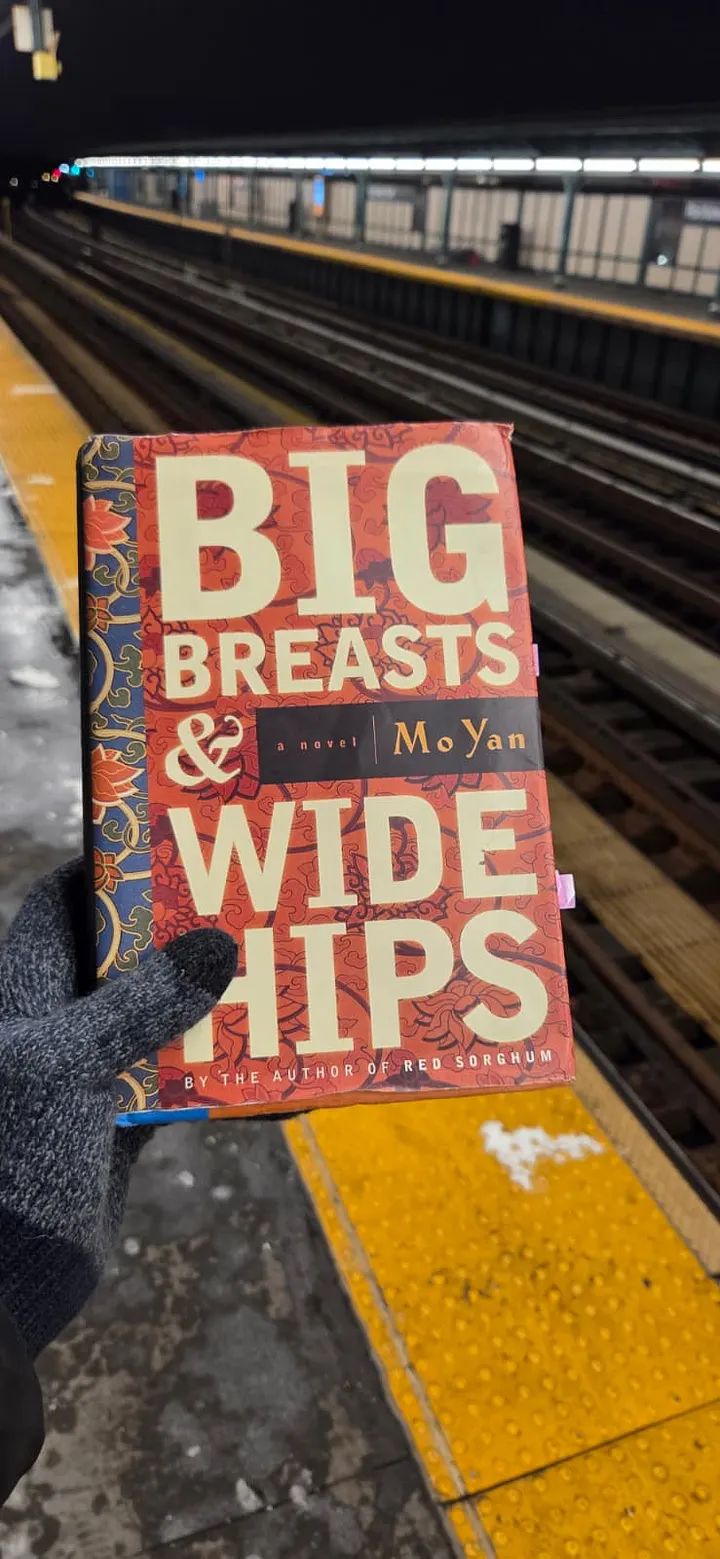
I know what you are thinking. Quite a topic, eh!?
It isn’t quite what you think, and yet it is what you already imagined; either way, you saw it coming.
The book Big Breasts and Wide Hips is a reflection on endurance, especially female endurance. Shangguan Lu gave birth to eight daughters and one son, Shangguan Jintong. Most of her daughters are not biologically fathered by her husband. Each is conceived with a different man, often foreigners or soldiers, largely because her husband is impotent. What might seem scandalous in another context becomes, here, a consequence of social chaos.
The novel raises questions of uncertain paternity as a byproduct of war, famine, revolution, and displacement. It shows how ordinary people, particularly women, absorb the shocks of history and continue living anyway. Motherhood becomes both a burden and a power. The female body is rendered as a site of suffering, sexuality, exploitation, and astonishing resilience all at once.
Mo Yan suggests that history is not experienced as ideology, but as hunger, fear, lust, loss, and stubborn persistence. Revolutions come and go. Morality shifts. Luck turns cruel or generous without warning. Yet life, like Shangguan at the center of the novel, refuses to stop reproducing itself.
Takeaways and insights
This novel was striking in its articulation and clarity. It exposes how female worth is socially constructed. I had understood patriarchy in theory before, but this book made it vividly real: a woman’s value is reduced to marriage, fertility, and, above all, the production of sons, regardless of her intelligence, strength, or suffering.
The notion that having only daughters is a failure is not merely cultural background; it permeates every relationship, informs every cruelty, and fuels resentment. This logic leaves scars not only on women but on entire families, turning mothers against daughters-in-law, twisting love into rivalry, and transforming survival into a constant negotiation of moral compromise. In the guise of vague moral standards, this book made me understand the heroism of women and mothers.
Reflections
The novel made me question how much of what we call “choice” is really submission to circumstance. The recurring idea that a wise person submits to circumstances unsettled me: When does adaptation become wisdom, and when does it become surrender?
It also forced me to examine my beliefs about justice and vengeance, because the book is relentless in showing that vengeance never heals the wound; it only keeps it open. Finally, it made me reflect on the concept of luck; how virtue and effort don’t always predict life’s outcomes, and how it often depends on timing, birth, gender, and historical antecedents. If luck cannot be escaped, whether good or bad, then perhaps the truest measure of a life is not success or purity, but the ability to keep one’s heart intact amid chaos.
Strong Ground by Brene Brown
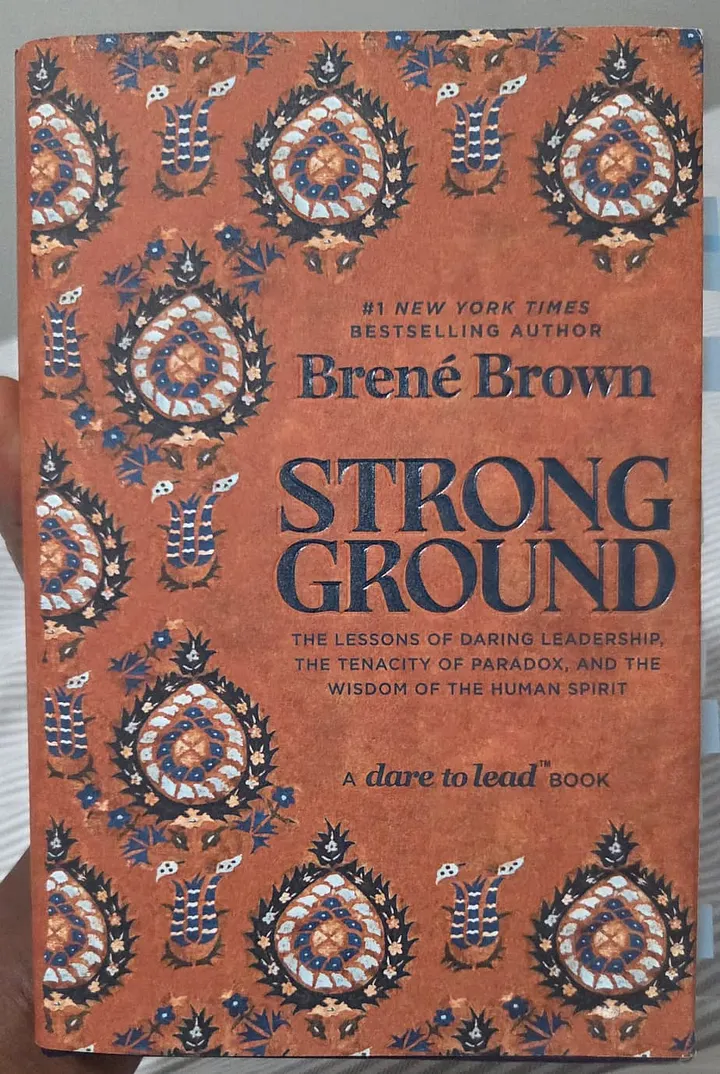
As the title suggests, Strong Ground is a book that delves into depth. It is about learning how to stand personally and collectively when certainty is gone. I loved Chekhov’s gun aphorism: if in the first act you hang a pistol on the wall, then in the following act it should be fired; otherwise, don’t put it there. Chekhov’s principle argues that every element introduced in a story must serve a necessary purpose or be removed.
Brene Brown reframes leadership as the capacity to stay grounded in vulnerability without flinching, and not merely as control or expertise. Experience, she argues, is often one of the worst predictors of future success. You may have done your previous job well or poorly, but it does not guarantee what comes next. Real strength comes from integration: mindset and behavior, courage and discipline, vision and systems, preparation and presence.
“Strong ground” is not stability in the sense of comfort; it is functional strength, the ability to remain open, curious, and accountable while navigating paradoxes. Some of the most transformative leaders, at all levels, have the ability to cast a poetic vision that excites people and gives them a sense of agency, while also overseeing the building of systems and communities of connected people capable of delivering on that vision.
Takeaways and insights
This book has reshaped how I think about growth. Usually, I think of growth within the box of gains, but now I have learnt that this does not always stick. Growth is a larger component, within which are the small interactions of daily shifts and the efficiency of decisions.
I had always believed that breakthroughs, new strategies, new habits, and new learning were enough, but this book made it clear that habits must be built within a system. Without alignment in values, routines, incentives, and relationships, progress is temporary.
Strong Ground offers patterns of thought rather than the clichéd displays of courage and discipline found in many similar texts. Now, I realize how often I have tried to “fix” outcomes without addressing the underlying structures that produce them. You cannot be a castle built on sand.
Reflections
The book made me question how often I mistake experience for competence, preparation for presence, and discipline for mere compliance. It forced me to ask whether the way I work with others truly expands their lives or simply extracts performance. It also challenged me to confront brutal truths while maintaining faith in long-term outcomes, especially when those truths are uncomfortable.
More personally, this book made me examine whether I am genuinely open to changing my mind. If wisdom is knowing what I don’t know, then the real work isn’t about intelligence or effort, it’s about cultivating the courage and motivation to think again, even when doing so threatens my identity or sense of mastery. Often, when we struggle to improve, the problem isn’t ourselves; it’s the system we operate within.
The Boyfriend
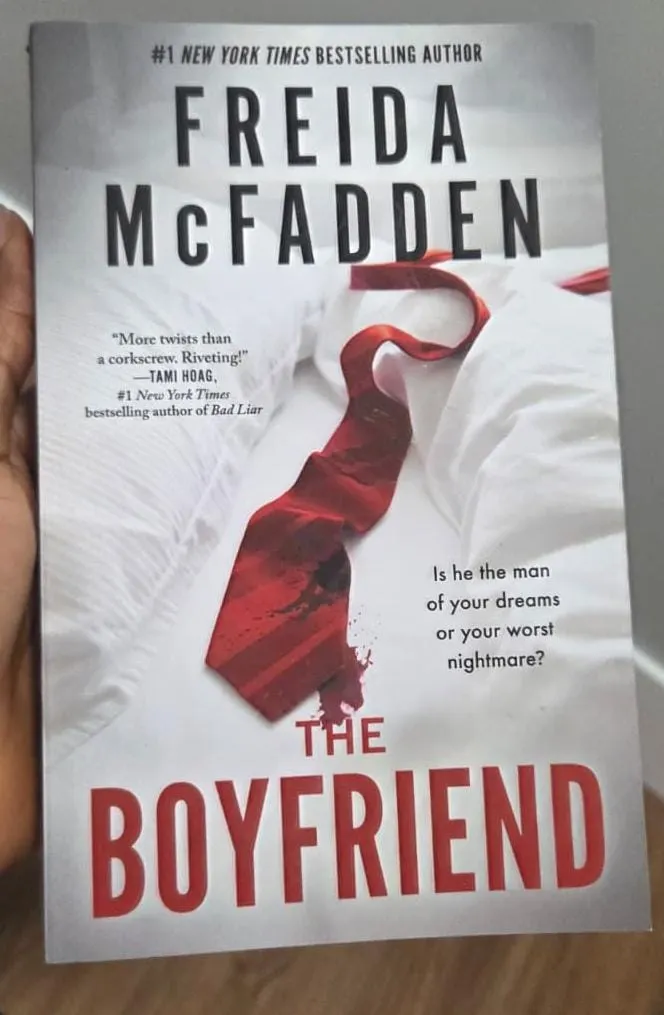
I’ve always loved Freida McFadden’s novels. There are always more twists than a corkscrew. Riveting is the only word that fits. That said, the red flags are almost always there if you pay attention, whether in relationships, friendships, or dating. You need to have honest conversations, because people often reveal themselves without realizing it.
The golden rule is simple: never put anyone on a pedestal. And those moments of apparent vulnerability, like when someone says, “Promise you won’t leave me”, are rarely casual. Often, they are weightier than they seem, carrying truths about attachment, expectation, and the seriousness of what’s at stake in relationships. Paying attention to these moments can reveal more than months of surface-level conversation ever could.
The Boyfriend is a psychological thriller, but beneath the suspense and dark romance, it’s also a keen study of human behavior. It explores how people willingly ignore discomfort when affection, attention, and routine feel safer than uncertainty. It shows how intimacy can cloud judgment, how obsession can masquerade as devotion, and how unreliable perception isn’t just a narrative device, it’s a survival mechanism. The book suggests that romantic relationships, much like familiar cities where everyone keeps to themselves, can quietly normalize danger when boundaries erode slowly. At its core, it’s about how deception thrives not because lies are convincing, but because we want the story to be true.
Takeaways and insights
One insight that stayed with me is how much easier it is to walk away early, before things become “official” or serious. Much like the idea that drinks are easier to leave behind before you’ve had too many, the book highlighted how the longer we stay, whether in a relationship, a narrative, or an identity, the harder it becomes to leave, even when the warning signs are clear. I hadn’t fully realized how commitment itself can become a psychological trap, independent of love.
Reflections
The book made me rethink how much of my idea of romance has been shaped by unrealistic cultural stories. Heavy on control, obsession, and imbalance, dressing them up as passion. It also pushed me to reconsider the tension between fantasy and practicality. Stability, like being an accountant, might not be glamorous, but it’s endlessly valuable, often overlooked in favor of intensity. I found myself questioning how we judge what’s “good” in life — love, sex, charm, work, or even something as simple as ice cream. Are we drawn to what feels dramatic, or what actually sustains us?
Most of all, it reminded me that while we can’t change the past, awareness can help us make better choices if we’re willing to see clearly, rather than layering more “cheese” onto what never quite worked in the first place.
More books to come!
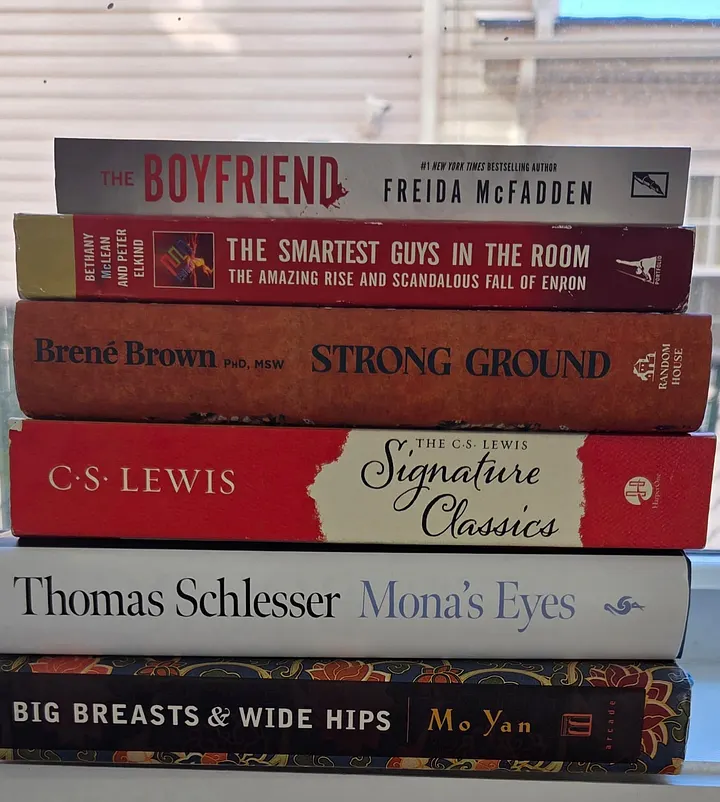
Reflecting on the books I’ve finished so far, I see that what lingers are the questions they have raised in my mind about endurance, agency, perception, and survival. Reading satisfies an unmet need: the need to witness, to understand, to think again about life and the systems we navigate. It reminds me that growth, insight, and self-awareness often emerge quietly in the margins, long after the page is closed. As I look to the rest of January, with three more carefully chosen books waiting, I am eager to see what truths will emerge, what patterns will unfold, and how my need for understanding and quiet reflection will continue to be satisfied in unexpected ways.
Till next time, dear reader, keep the pages flipping.