A reader lives a thousand lives before he dies. The man who never reads lives only one.” — George R.R. Martin
A lifetime is not enough for living just once. We may not all get to travel or wander wondrously, but through pages, we can wander across countless landscapes all in the mind.
Dear friend,
You might think I’ve been romanticizing reading, treating it as the ultimate measure of a meaningful life, as though not being drawn to books somehow makes your life less valuable. No, that’s not what I believe.
However, what I cherish is raw curiosity, and I have found books to be portals that scratch that itch. Please feel free to explore other paths to feeding your curiosity.
People often ask me, “Why do you read so much? Why, so many books?”
I’ve never found a neat or logical answer, and I don’t think I will. Perhaps because, to me, reading is not an act of logic, but of longing. A longing to step beyond the narrow corridor of a single life and into the vast architecture of curiosities and of systems.
I believe that books are not mere objects or pastimes; they are portals. Through them, I have lived in ages I never belonged to, giving me a sense of time travel.
Lately, I have found myself in the rustic 1800s, learning about Mikhail Kutuzov and the unspoken stories that shaped Russian history, and peeking into the scheming mind of Napoleon Bonaparte. Through the pages of books, I engage great minds I would never have had the pleasure of meeting. I peek into their minds, I stand where they stood, watched them fail and make decisions I’ll never face, only because they already did.
Books offer something reality alone cannot give me: depth, a plunge into the darkest questions, the quietest reflections, and the most profound truths of what it means to exist.
Dearest reader,
Kindly walk with me through these narrow paths, where curiosity is our map and understanding our torch. We only know what we experience, but there are a lot of things we do not know and perhaps wouldn’t experience without sinking our minds into books to fill the voids in our curiosity gaps.
You’re in luck; you may now live many lives vicariously through my little exegesis of books I have enjoyed so far in 2026. To read is not simply to learn; it is to become.
Maybe this is why we read, and why in moments of darkness we return to books: to find words for what we already know. — Alberto Manguel
The C.S Lewis Signature Classics
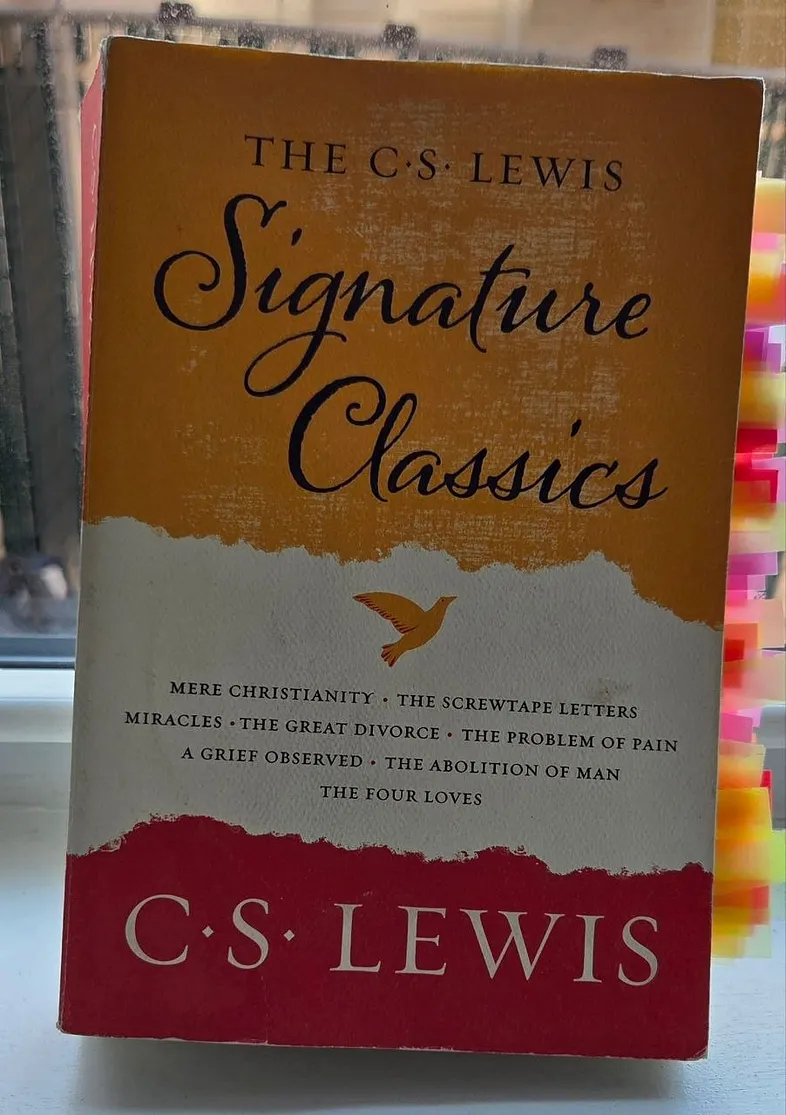
“Eating and reading are two pleasures that combine admirably.”― C.S. Lewis
Following C.S. Lewis’s advice, I savored this classic like a gourmand, paired with a Starbucks iced brown sugar oatmilk shaken espresso.
The C.S. Lewis Signature Classics is quite a long read; it’s a collection of philosophical and theological essays. Some books tell you what to think, and then some books teach you how to think. This book surely does teach one to traverse the terrains of thoughts and thinking, not as a rigid doctrine, but a blend of intellectual training, mixing reason, imagination, and moral reflections to explore life’s hardest questions.
Here are my annotated nuggets from this book;
Clarity

Clarity feels like an overflogged word and feels almost cliché, but it’s a quintessential element in life.
CS Lewis persists on clarity; he hammers and nails the idea that reality is not divided into neat categories of “good” and “bad” impulses. Like notes on a piano, impulses are not inherently wrong or right; it depends on when and how they are used. Clarity hinges on the concept of context and remains dynamic, requiring judgment rather than blind rule-following.
Experience and interpretation
“At first, it is natural for a baby to take its mother’s milk without knowing its mother. But we must not remain babies”. — C.S. Lewis
People ate and were nourished long before they understood vitamins; in the same manner, we often live truths before we can explain them.
C.S. Lewis suggests that philosophy shapes how we interpret experience, meaning that before we appeal to “what life teaches us,” we must examine the lens through which we see.
Faith

C.S. Lewis believes that faith is not blind belief, but practiced trust.
Can trust be practiced? Well, C.S. Lewis believes so. The helplessness of surrendering to repetitive bouts of hope builds a threshold for character, and this is what faith is about.
It is something that matures, much like a child who begins life dependent and unaware but must eventually grow into understanding. To remain intellectually or spiritually passive is, in his metaphor, to remain an unhatched egg, safe, but ultimately stagnant. We cannot remain “ordinary, decent eggs.” We either grow or we decay.
Love
Love, a dreadful bond — Davy Jones –Pirates of the Caribbean
Love may be quite a sacred concept, but methinks, it’s not as dreadful as Davy Jones thinks it is, but yeah, we get him.
C.S Lewis sees love through an unsentimental lens. Being “in love” is powerful, but it is not sufficient as a foundation for commitment. Feelings fluctuate, while promises give structure and endurance. In this way, love becomes not just an emotion, but a choice and discipline. Love is not about the feelings, but a persistent choosing.
Pride and self-consciousness
If you are worried about the people outside, the most unreasonable thing you can do is to remain outside.
Whether in social life or creative work, constantly thinking about how you are perceived undermines authenticity. Ironically, originality and genuine connection emerge only when we stop trying to achieve them and focus instead on truth.
Excessive skepticism
“To see through everything is the same as not to see.”
A world in which everything is explained away becomes a world devoid of meaning. Transparency without substance leads not to clarity, but to emptiness.
Intellectual humility
“No one truly knows how strong temptation is until they try to resist it”. — C.S. Lewis
We often mistake learned habits for instincts, or assume we understand ourselves better than we do. Self-knowledge comes through effort, not assumption.
In the end, C.S Lewis’s work is less about providing answers and more about refining perception. It teaches that wisdom lies in asking the right questions, thinking carefully about consequences, and recognizing that growth often requires transformation, not mere adjustment. Not a doubt that C.S. Lewis was indeed a profound thinker.
Mona’s Eyes By Thomas Schlesser
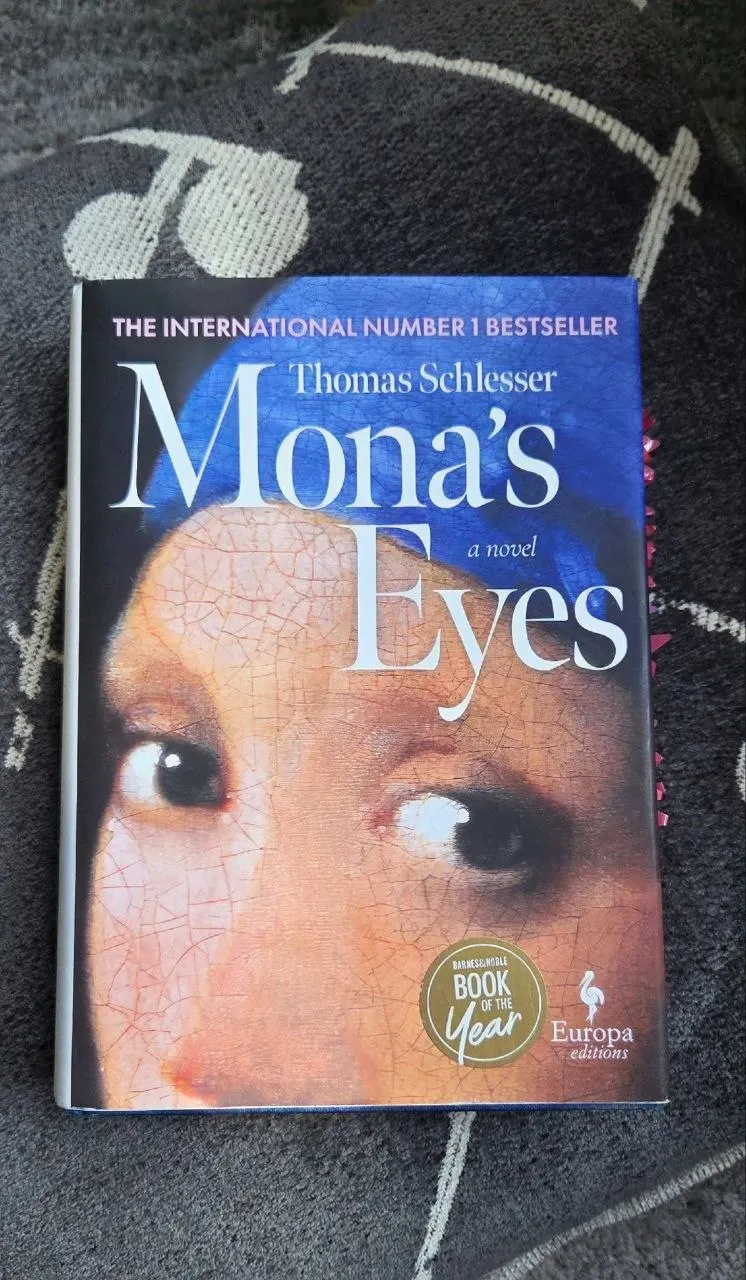
“I found I could say things with color and shapes that I couldn’t say any other way — things I had no words for”. — Georgia O’Keeffe
This book nudged me to take action and experience art, so I read most of its pages sitting alone in the Banksy art museum.

It’s an episodic and deeply reflective book; the novel unfolds like a walk through a museum, each chapter feels like a painting, every page feels like a moment to re-live, asking not to be consumed in haste, but contemplated in silence.
One major premise of the book is that: before we speak, before we judge, we must first learn to look. This is deceptively simple, yet profoundly difficult. The world will reveal itself differently when we take pauses without any sense of haste or desperation.
Mona’s Eyes is not a novel that rushes forward, but one that lingers, inviting the reader to pause, to look again, and perhaps, to finally learn how to see.
What I found most compelling is how this book dissolves the boundary between fiction and thought. It is as much a story as it is an education; an immersion into art, philosophy, and the subtle ways perception shapes reality. Schlesser reminds us that understanding does not come from grasping everything at once, but from resisting that urge altogether. Most people, as the book suggests, try to “gobble up” beauty, only to lose it in the process. Appreciating beauty is a spiritual act of gratitude.
Mona’s eyes on Growth
“Growth is first a loss, before progress”
Perusing through the novel was a quiet meditation on life’s deeper truths: loss, love, sensitivity, and the strange weight of existence. It suggests that the first lessons of life are not gained, but lost. Childhood slips away before we understand it; meaning dissolves just as we begin to hold onto it. Growing up, then, is not an accumulation, but a surrender. To live fully is to accept that everything, time, love, and even the self, is in a constant state of departure. My childhood went so fast, I can only have an unsuccessful reminisce about it.
On Melancholy

The novel’s reflections on melancholy are particularly haunting for me. It is not portrayed as a dramatic sorrow, but as something far more elusive: a slow fading, a quiet erosion where meaning itself seems to thin out. And yet, within this fragility lies a strange intensity; one that makes us feel alive precisely because it reminds us how easily everything can vanish. Life is a fleeting moment.
On Love
Love, too, is treated with the same philosophical honesty. It is desire, and desire is born from lack. Even at its most beautiful, when reciprocated, when it feels absolute, it remains incomplete, shadowed by time and the inevitability of separation. There is no perfect fulfilment, only fleeting moments that feel like it.
On Simplification
For the one who truly sees, even loss becomes fertile ground.
What ties all these ideas together is the notion of breaking things apart to understand them. Whether it is art, emotion, or life itself, the book insists that clarity comes through dismantling; through starting again, from scratch, without illusion. And in that process, failure loses its sting.
Mona’s Eyes is ultimately a quiet guide to perception. It does not give many answers, but it teaches the discipline of attention; a way of being present with what is, without rushing to possess it. And in doing so, it prompts a changed way of looking at the world.
The Smartest Guys in the Room: The Amazing Rise and Fall of Enron By Bethany McLean and Peter Elkind.
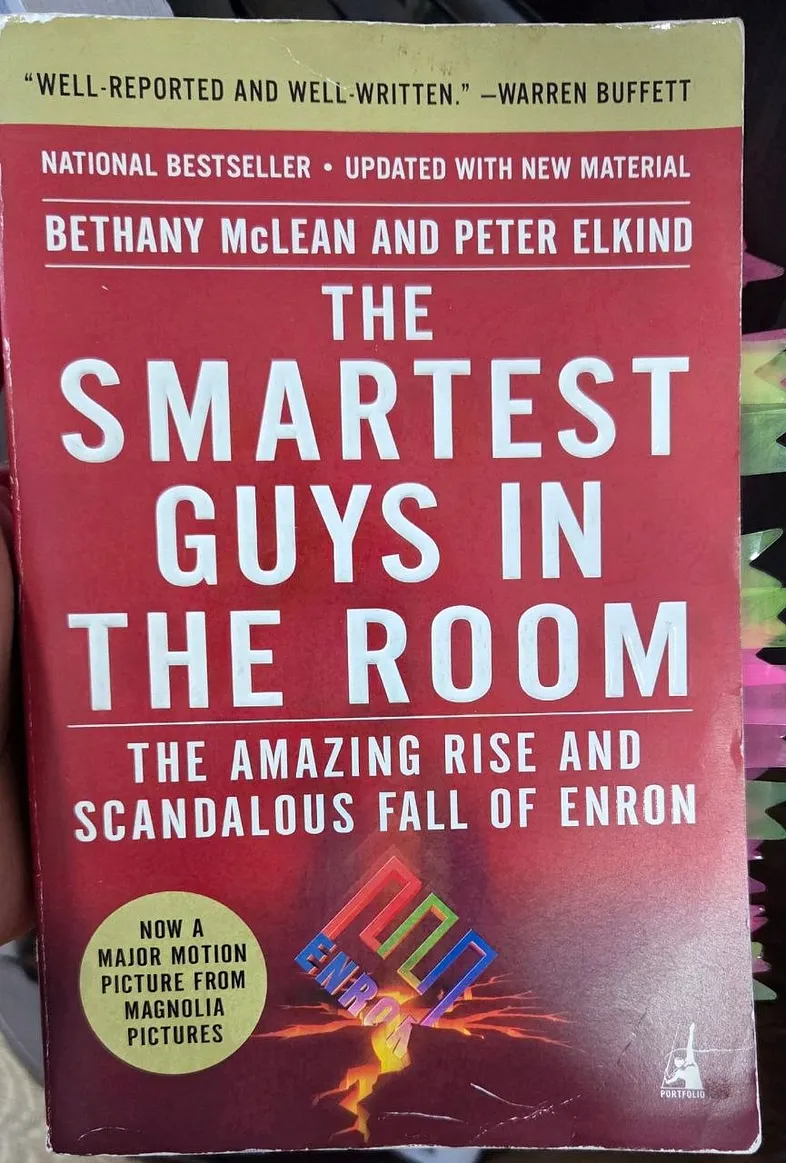
This book is a narrative non-fiction; it’s quite a lot, but you’d love it, especially if you are curious about power, corruption, scandals, and trying to understand what goes through people’s heads and their perspectives. You can tell that I like true dramatic stories without being overtly fictionalized.
Internalized righteousness
Enron was the largest corporate scandal in American history, but precious few were willing to admit that they had done anything wrong. Wasn’t anybody sorry?
The message is clear: the wealth and power enjoyed at the top of the heap in corporate America demand no sense of broader responsibility. Alas, ethical behavior requires nothing more than avoiding the explicitly illegal, that refusing to see bad things happening in front of you makes you innocent, and that telling the truth is the same as making sure that no one can prove you lied.
What makes The Smartest Guys in the Room unsettling isn’t just the scale of the collapse; it’s how ordinary the thinking behind it feels.
The Smartest Guys in the Room traces the rise and fall of Enron, once held up as a model of innovation and intelligence. What it exposes, though, is something less flattering: intelligence and ambition, left unchecked, don’t produce integrity. Sometimes they make it easier to justify the opposite.
No one inside the company thought of themselves as the villain; that’s what stands out! Even as the structure rotted, very few people believed they were doing anything wrong. The standard wasn’t honesty; it was deniability. If something couldn’t be proven illegal, it passed. If you didn’t look too closely, you weren’t responsible. That kind of thinking doesn’t come out of nowhere. It grows out of culture.
Enron rewarded deals, and appearance mattered more than substance. As long as numbers looked good, no one asked how they got there. Over time, that does something predictable: it trains people to prioritize perception over reality. And once that shift happens, collapse isn’t a surprise; it’s just a matter of timing.
Rationalization over truth
One of the more uncomfortable lessons is how easily smart people rationalize bad decisions. Intelligence doesn’t guard against self-deception; it often strengthens it. The more capable someone is, the better they become at explaining away what they’d rather not confront. Add ego to that, and rules start to feel optional.
Incentives vs ethics
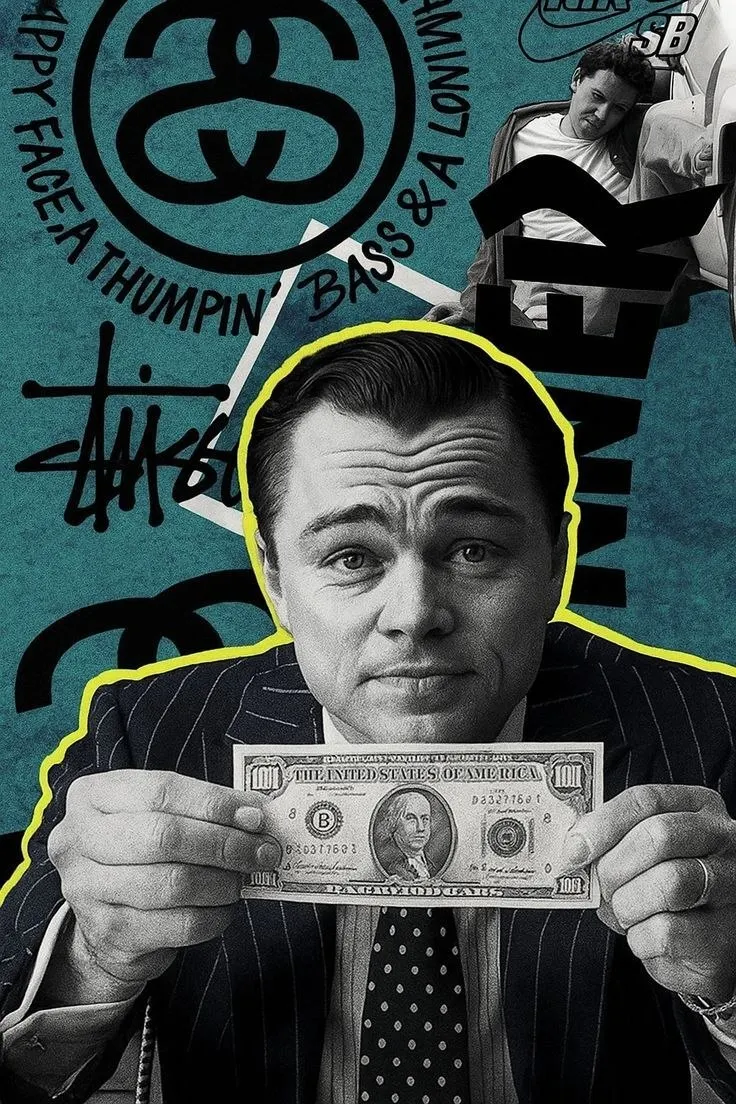
Incentives are strong models for behavior. When rewards are tied to short-term gains, behavior follows. Ethics don’t usually disappear all at once; they erode at the points where they become inconvenient. If the system pays you to ignore risk, eventually you stop seeing it.
Silence is not always golden
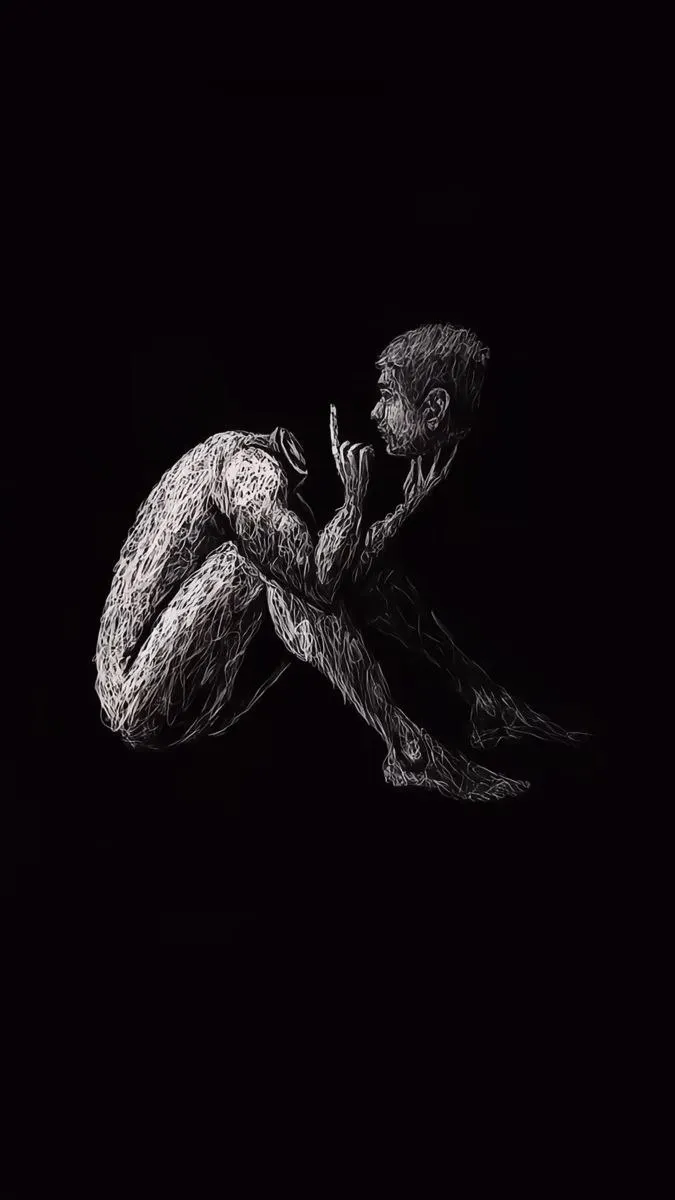
When truths go unspoken, consider silence a lie.
Silence plays a core part in any decadence. It takes very few people acting wrongly for things to spiral out of control. Most just have to say nothing. It’s easier to assume someone else is responsible, or that the situation isn’t as bad as it looks. But in practice, silence functions as agreement when there are things to be said.
Charm isn’t credibility
There’s also a warning here about charisma. Enron’s leadership was persuasive, confident, and convincing. But credibility isn’t the same thing as presence. A good story can carry weak substance for longer than it should, especially when people want to believe it.
This faux charisma rubs into the structure of the business itself. When today’s success relies on tomorrow’s deals, you’re trapped on a relentless treadmill. You don’t just need to perform; you need to keep outperforming, just to stand still. Hidden risk builds quietly in the background, masked by growth.
At some point, reality catches up. It always does.
What the story ultimately shows is not just a failure of individuals, but a failure of alignment. When a company values looking successful over being honest, when incentives reward distortion, and when accountability is diffuse, the outcome is almost predetermined.
The collapse wasn’t caused by a single bad decision. It was the accumulation of small permissions; each one justified, each one explainable, each one easier than the last.
That’s what makes it worth paying attention to. Not because Enron was uniquely corrupt, but because the patterns it reveals are not unique at all.
My hands are already stained blue with ink, but I hope these reviews prove instructive.
I must refill my ink cases now… See you soon.